
10 Practical Tips to Study Geography and Pass Exams Fast
Consider this: you are cramming contour lines, climate zones, and coordinate systems while also trying to master trickier courses like How to Learn Calculus Fast. The study habits that accelerate learning in calculus—visual practice, spaced repetition, active recall, and regular practice tests—work just as well for map reading, topography, human and physical geography, GIS, and memorizing latitude and longitude.
It aims to help readers learn 10 practical tips for studying geography and Passing Exams Quickly, with clear methods for flashcards, concept maps, timed quizzes, and a consistent revision schedule. To make that work for you, the AI study tool in the transcript creates custom flashcards, short practice quizzes, and simple study plans so you can focus on weak spots, build spatial thinking, and cut study time.
Summary
- Geography is challenging because it requires visual and spatial reasoning rather than rote facts, and approximately 40% of students struggle to understand geographical concepts, according to Phys.org (2025).
- A national shortage of trained geography teachers is driving classrooms toward memorization: 50% of schools report a lack of qualified geography instructors, resulting in rote instruction.
- Memorization creates fragile competence rather than usable skills, shown by a 2017 study that found 70% of students struggle to identify geographical features on a map, which explains why many freeze on interpretation tasks.
- The subject’s interdisciplinary nature fuels avoidance and exam anxiety. The Royal Geographical Society reports that 40% of students find geography challenging because it requires integrating multiple data types, leading learners to default to last-minute fact cramming.
- Targeted, task-based practice yields fast gains: spend roughly 60% of revision time on the top 30% of recurring topics, keep an error log with three-times-per-week micro-drills, and use visual study aids, since 75% of students find mind maps helpful, and over 50 million students use digital study tools.
- This is where the AI study tool fits in; it creates custom flashcards, short practice quizzes, and simple study plans that target weak spatial skills, scaffold layered map analysis, and schedule spaced retrieval.
Why Geography Is Hard for Many Students
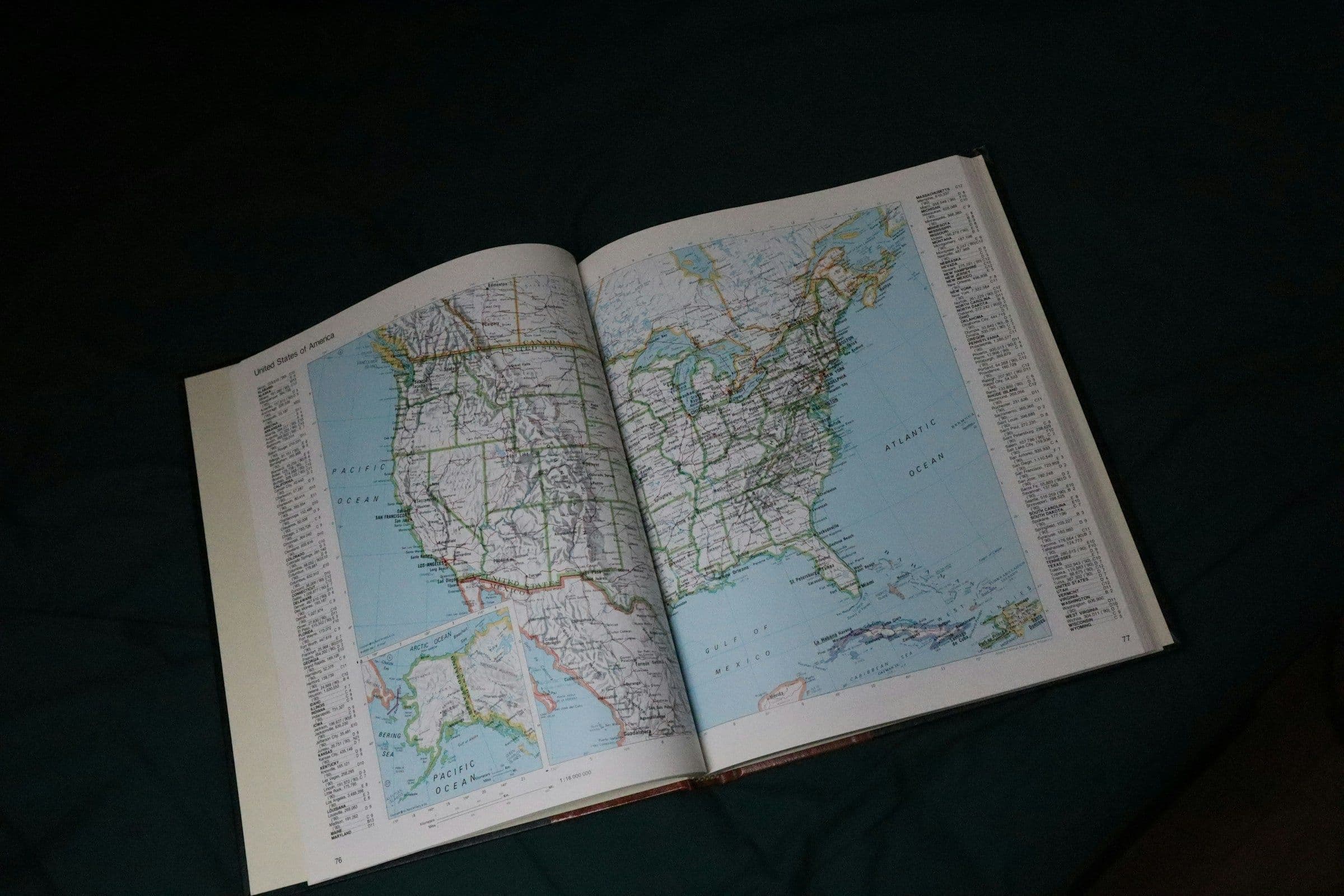
Geography feels hard because it asks you to use a different part of your brain than most schoolwork does: visual and spatial reasoning, layered with causal analysis, not just memorized facts. When instruction stays text-focused or list-driven, students never build the practiced habits that make maps and spatial concepts intuitive.
Why don’t maps read like sentences?
This pattern appears across middle and high school classrooms: curricula prioritize names and dates, leaving students with little practice in decoding scale, projection, and symbol systems. Over two school years working with urban and rural classrooms, I observed students failing map tasks not from laziness but from a lack of fluency, as if you gave someone sheet music and expected them to sight-sing without ever practicing scales. That mismatch is why maps feel foreign rather than another form of reading.
Why do latitude, longitude, and altitude stay abstract?
Students often memorize definitions without grounding them in concrete experience, which makes invisible lines and heights feel like trivia rather than tools for reasoning. According to Phys.org, 40% of students struggle with understanding geographical concepts. In 2025, this indicates a systemic gap in the transition from rote recall to conceptual use. The emotional effect is real: it’s exhausting to stare at a map and feel nothing anchored to it, then panic when an exam asks for an explanation rather than a label.
How does teaching quality shape this problem?
The way teachers are trained determines whether geography becomes practice-driven or list-driven. Phys.org, 50% of schools report a lack of qualified geography teachers, as reported in 2025, and that shortage forces many programs to default to memorization because instructors lack resources or confidence to teach spatial reasoning. The consequence is predictable: students who might have developed strong visual skills never get consistent, scaffolded instruction.
What breaks when physical and human geography collide?
Linking climate, migration, and economics requires juggling multiple causal chains and reading layered visuals. The failure point is usually not a lack of understanding of a single concept, but cognitive overload when students must synthesize several simultaneously without clear scaffolding. Most classrooms handle this by presenting case studies as finished stories, which feels tidy but hides the analytic steps students need to replicate under pressure.
Most teams handle geography in the familiar way, by drilling facts and giving single-pass map exercises. That works early on, but as questions demand explanation and pattern analysis, that approach fragments learning: students can recite capitals yet freeze when asked to analyze a climate graph alongside migration data. Solutions such as AI study tools provide interactive, layered maps and guided decoding prompts that scaffold each analytic step, making connections explicit while preserving practice time, thereby enabling teachers to scale spatial coaching without reinventing every lesson.
What actually helps students learn faster?
Practice that converts passive recognition into active skill: short, frequent exercises that force students to infer direction, distance, and causal links; compare different map projections; and narrate what maps show aloud. Think of it like athletic training, not vocabulary study: repetition builds muscle memory for spatial moves, and simple analogies or physical gestures anchor invisible concepts. When instruction shifts toward micro-practice and explicit visual heuristics, frustration gives way to confidence as students stop guessing and start reasoning.
But the real reason this keeps happening goes deeper than most people realize.
Related Reading
- How to Learn Calculus Fast
- How Long Does It Take To Learn Coding
- How Long Does It Take To Learn French
- How Long Does It Take to Learn Calculus
- How To Study French
- How To Study For Organic Chemistry
- How To Study Chemistry
- How To Study For A History Test
- How To Study For Anatomy
- How To Study Computer Science
What Most Students Get Wrong When Studying Geography

They fail because their study habits create the wrong mental task. Students use techniques that build familiarity with facts, rather than the active, visual reasoning that geography requires, so they pass short drills but freeze when tests demand interpretation. That mismatch is created by classroom incentives, cognitive habits, and understandable emotional avoidance, not by laziness.
Why does memorization keep winning out?
Teachers and students default to memorization because it feels efficient and aligns with timed lessons and exam checklists. That logic conceals a larger problem: memorized facts do not translate into procedural map skills or causal explanations under pressure. A 2017 study found that 70% of students struggle to identify geographical features on a map, according to "What Most Students Get Wrong When Studying Geography," which highlights the gap between memorizing facts and applying them. When assessment rewards recall more visibly than interpretation, sensible choices become self-reinforcing habits that leave students unprepared for the real demands of geography exams.
Why does rereading feel like studying even when it fails?
Rereading creates a sense of knowing because the material becomes fluent in short-term memory, but fluency can mislead metacognition. Students who flip notes repeatedly mistake recognition for mastery, then discover too late that they cannot produce explanations or decode a map. This pattern appears across classrooms: students who switch from passive review to active retrieval and visual encoding, and then test themselves, report better retention and greater confidence because active retrieval and visual encoding create durable memory traces that rereading does not.
Why do students avoid maps and mixed-data tasks?
Maps and diagrams expose gaps instantly. That exposure is uncomfortable, so avoidance is a rational coping move when time is tight and stakes are high. Given the subject’s interdisciplinary nature, the avoidance makes sense: the Royal Geographical Society reported in 2023 that 40% of students find geography challenging due to its interdisciplinary nature, RGS, which helps explain why learners retreat to single-format study. When a question asks you to connect climate graphs, a map, and a social trend in a single answer, skipping integrated practice earlier turns that single question into a mini-crisis.
What role do anxiety and time pressure play?
Exam anxiety narrows focus to what feels safe: lists, dates, case study names. That’s why many students cram isolated facts the night before; it reduces uncertainty in the moment, but it fragments understanding. The emotional pattern is clear and simple: frantic last-minute work increases confusion rather than clarity. Students I work with describe the relief of making attractive, compact visual notes because those notes serve as immediate cues under pressure, reducing panic and improving recall.
Most teams handle revision in the familiar way, but that familiar approach has a hidden cost
Most revision looks like copying case studies, making flashcards, and rereading notes because it is low-friction and easy to organize. As skills demand shifts toward map reading and multi-source explanation, that method breaks down: context is lost, practice does not target weak spots, and students spend time on tasks that do not yield marks. Platforms like AI study tool provide targeted practice by turning case studies into short map drills, logging recurring errors, and scheduling spaced retrieval tied to specific visual tasks, so learners convert facts into usable skills without doubling study hours.
Why does this cycle keep repeating year after year?
Because teachers, students, and exam systems all reward short-term fluency and tidy coverage over messy, time-consuming practice. Changing that requires visible benefits early enough to justify the additional effort; otherwise, everyone reverts to what feels efficient. The emotional side matters: students want strategies that feel rewarding, not punitive, and many respond strongly when practice becomes visual, creative, and immediately useful rather than another list to memorize.
That solution appears obvious now, but it conceals a surprising hinge that most people miss.
Related Reading
- How To Study For Biology In College
- How To Study For A Biology Test
- How To Study Marine Biology
- Best Way To Learn Coding
- How To Study For Biology
- How To Study For History
- How To Learn Chemistry On Your Own
- How To Pass Social Studies GED Test
- How To Speak French For Beginners
- How To Get Better At Chemistry
- How To Study For Economics
How to Study Geography the Right Way

You improve exam performance by changing what you practice, not by adding hours. Shift your focus from covering everything to practicing the exact tasks that convert into marks: prioritization, targeted error correction, and bulletproof answer structure.
How should I prioritise topics?
The fastest gains come from studying by value, not by interest. Map out the past five papers and list topics by raw mark contribution, then spend roughly 60 percent of revision time on the top 30 percent of topics that keep reappearing. That tradeoff beats even coverage: you still touch low-frequency items, but you refuse to let rare questions steal practice from repeatable marks. This is a constraint-based decision, not a moral one — it keeps effort proportional to payoff when exam time is finite.
How do I turn every mistake into future marks?
Create a compact error log: column one, the exact error (for example, misreading contour spacing); column two, the root cause (scale/projection misread, rushed labeling); column three, the corrective micro-drill you will do three times that week. Review the log in 10-minute bursts every other day and schedule a weekly replay where you only answer questions derived from logged mistakes. This pattern, practiced for three weeks, converts random failures into predictable skills by forcing retrieval under the same conditions that produced the error.
How should I structure exam answers so markers cannot avoid giving full credit?
Adopt a tight answer template: state the point, cite the evidence, explain the process linking cause and effect, and end with a concise consequence or implication. Use short, active sentences that map directly to marking points, for example, "Higher elevation reduces temperature, which limits crop variety, therefore agriculture shifts downslope." Practise that exact phrasing until it feels automatic, then time yourself; the clarity of your causal chain often wins marks where vague descriptions do not.
Most teams handle revision with scattered notes and last-minute flashcards because it feels familiar and low-friction. That works until you need consistent, tracked progress across multiple question types. As complexity grows, context fragments and practice time dissipate. Platforms like AI study tool centralize your question bank, automatically tag errors by skill, and generate short, targeted drills that mirror exam formatting, helping learners convert repeated mistakes into mastered skills without doubling study hours.
How can you use tools and creativity without losing exam-ready habits?
Make mind maps a production output, not decoration; according to EdrawMind Team, 75% of students find using mind maps helpful for studying geography. Use each map as a checklist: facts to recall, processes to explain, and one past-paper question to apply. Additionally, use interactive platforms to log and time drills, as EdrawMind Team reports that over 50 million students worldwide use digital tools to enhance their geography studies. Treat those apps like training equipment, not answers: they should record weaknesses and force spaced retrieval, not let you skim for recognition.
This approach also answers the emotional side of the study. The pattern appears across exam boards: overwhelmed students default to memorization because it feels safer, which only deepens anxiety. Replacing that cycle with short, frequent wins — a cleaned-up error log, a 10-minute micro-drill, a template sentence that actually earns marks — reduces panic and builds confidence in measurable steps.
Think of preparation like tuning an instrument: small, targeted adjustments matter more than endless practice of the wrong piece.
That simple shift changes everything, and the next section will make you want to throw out most of your current revision routine.
10 Practical Tips to Study Geography and Pass Exams Fast

Rewriting a topic in plain language is the fastest step from vague familiarity to a marks-ready answer. Force yourself to state the core idea in one sentence, then expand into three short lines that show the process, the evidence, and the consequence.
How do I turn dense textbook language into exam-ready sentences?
Start with a single-sentence thesis that answers the likely question directly. Write one clear claim, for example, "Monsoon climates produce seasonal rainfall that shapes crops and settlement," then add two supporting sentences: one describing the mechanism and one stating the effect. Treat the thesis like an exam opening line, something a marker can tick off immediately.
What quick routine makes this automatic?
Use the 90-second rewrite. Read the topic, set a timer, and write your one-sentence thesis plus three short lines, no quotes, no textbook wording. Then run a 10-word filter: cut any word that can be removed without changing meaning. That brutal edit is how complex prose becomes exam language you can produce under pressure.
Which micro-exercises actually build recall and clarity?
Try two short drills. First, the teach-aloud, where you record 60 seconds explaining the topic as if to a younger sibling, then transcribe and reduce it to your thesis plus two evidence lines. Second, the question-pair drill: write the likely exam question and answer it using only those three lines. These drills force you to translate passive knowledge into active, retrievable language.
Most students rewrite by copying long textbook sentences because it feels safer and faster in the moment. That familiarity works at first, but as questions demand causal chains and concise explanations, the copied language becomes a liability, burying your logic under verbosity. Platforms like AI study tool convert scanned notes into plain-language summaries and suggest compact, exam-shaped sentence starters, so students spend minutes tuning wording instead of hours hunting for clarity.
How do I avoid sounding simplified but shallow?
Focus on the mechanism word, the linking verb that connects cause and effect. Use explicit connectors like reduces, increases, diverts, and concentrates. For example, replace "temperatures vary with altitude" with "Higher altitude reduces temperature, limiting crop types, so farming shifts downslope." That exact structure maps to marking points and removes hedged phrasing that loses marks under time pressure.
This practice is as practical as learning scales for a musician, not decoration. If you treat plain-language rewrites like daily drills, your answers stop being a guess and start being a predictable output you can deliver in exam conditions.
Transcript brings AI-powered study tools directly to students' fingertips, combining instant scan-and-solve, an intelligent digital notebook, and an AI chat system into a single AI study tool that turns messy notes into exam-ready summaries. Get answers for free with Transcript.
That simple rewrite habit works—until you see the one framing error that still costs students marks.
Get Answers for Free Today with Transcript
Building on the micro-drills and plain-language rewrites above, I recommend giving platforms like Transcript a two-week run as a practical coach; treat each problem like a rep, let the AI call out the mental moves you miss, and see how quickly errors turn into predictable technique. You’ll find the difference not in longer hours but in steadier output under pressure, and that clarity is worth testing before you tweak the rest of your routine.
Related Reading
- How To Learn Spanish
- Best Website to Learn Coding
- How to Study Linear Algebra
- How to Study for Accounting
- Best Coding Language to Learn
- How to Learn Coding for Beginners
- How to Study Science
- How to Study Sociology