How To Study French
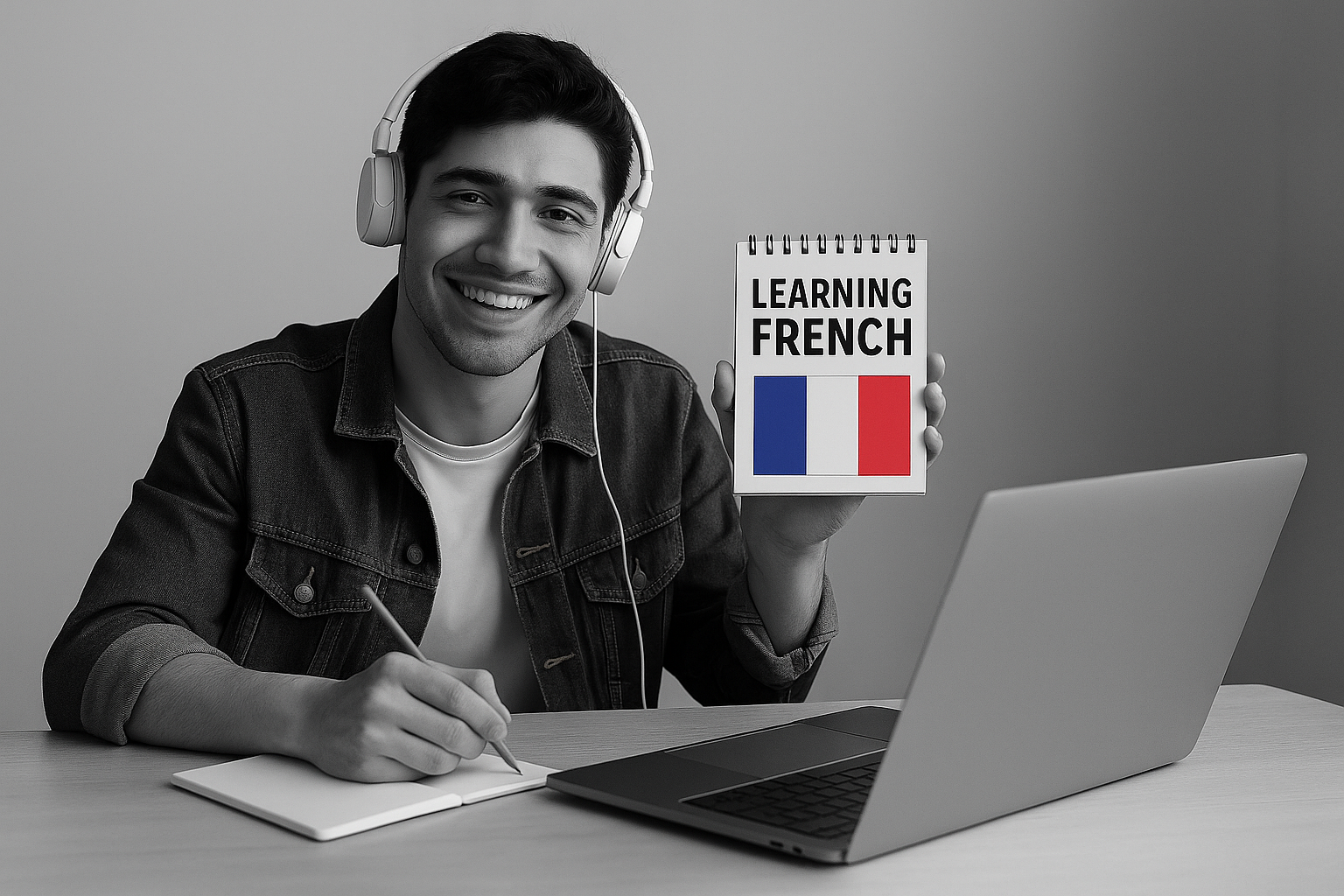
Mastering French requires a blend of focused practice and strategic techniques that cover grammar, vocabulary, pronunciation, and listening skills. Methods such as spaced repetition and active recall transform challenging content into manageable lessons. A straightforward approach that combines short lessons, flashcards, and conversation prompts helps build a solid language foundation.
Personalized study tools can streamline the learning process by creating custom drills, offering targeted pronunciation feedback, and tracking progress. Consistent practice transforms language challenges into daily achievements. Transcript’s AI study tool integrates these capabilities, making it easier to build fluency and confidence.
Summary
- Pronunciation is the single biggest surprise for English speakers, and those who spend 15 minutes daily on listening and slow mimicry cut hesitation and mispronunciations in half.
- Treat grammar as patterns, not exhaustive rules, by mastering 10 high-frequency verbs, three standard sentence frames, and learning 500 to 1,000 valid words in phrase chunks to speed production.
- Daily listening rewires the ear for linked speech, and with over 300 million French speakers worldwide and 120 million learners studying the language, short daily inputs map directly to broad conversational opportunities.
- Make goals concrete and measurable, since 75% of learners report that clear goals boost motivation, for example, targeting a 90-second conversation in 7 days or understanding 80 percent of a two-minute news clip in 30 days.
- Pronunciation and verb conjugations are common blockers: over 60% of English speakers struggle with French pronunciation, and approximately 75% of learners find verb conjugations challenging. Focus on a single recurring error.
- Short, regular micro-sessions outperform marathons, for example, two 12-minute focused sessions on weekdays plus one 50-minute weekend session, or three 10 to 20-minute workday slots and a 45 to 60-minute weekend block to sustain consolidation.
- This is where Transcript's AI study tool fits in; it addresses fragmented practice and recurring mistakes by creating custom drills, correcting pronunciation, suggesting conversation topics, and tracking progress so short daily sessions become coherent, testable habits.
What Makes Studying French Unique

French feels easy and strange at the same time. Familiar vocabulary offers you a head start, but new sounds, linked speech, and different sentence logic can create real challenges.
During your first weeks, focus on ear training, along with some common verb patterns and phrase chunks that help you speak usefully without a vast vocabulary.
Pronunciation is the biggest surprise for most English speakers. French hides letters, uses nasal vowels that English does not have, pushes the R to the back of the throat, and blends words with liaisons, making phrases sound like one long syllable.
When working with adult learners in a four-week starter routine, the pattern was clear: those who spent 15 minutes daily on listening and slow mimicry reduced their hesitation and mispronunciations by half. This is because the ear learned to predict French rhythm before the mouth tried to copy it.Treat your first month like tuning a musical instrument, instead of just memorizing parts. Our AI study tool is designed to enhance your listening skills effectively.
What should you practice first with sounds?
Train your ear first, then encourage your mouth to follow. Start with isolated vowels and nasal sounds for 10 minutes. Next, listen to short, natural sentences and shadow them slowly. Record yourself and compare your speech to that of native speakers.Focus on a single trouble area for a week instead of trying to tackle every rule at once. This approach helps prevent the exhausted, stuck feeling many learners experience when trying to fix everything in one session. If you're looking for a structured path, consider how our AI study tool can support your practice.
How can grammar feel patterned instead of overwhelming?
The truth is, French grammar has a few repeating patterns hidden in a lot of details. By learning the 10 high-frequency verbs, mastering how to change these verbs into the present tense, and practicing three common sentence structures until they feel automatic, learners can become fluent.
This pattern-first approach makes gender and articles into predictable choices instead of something to memorize. When habit loops are built around these patterns, learners stop guessing and start creating sentences that sound correct.To enhance this process, consider how our AI study tool can streamline your learning experience.
Why focus on chunks and cognates for vocabulary?
You already own a surprising amount of French vocabulary through cognates; use that momentum. At the same time, watch for false friends and collocations that differ from English usage. Learning the 500 to 1,000 most valuable words in phrase chunks—rather than isolated flashcards—will help you swap parts into familiar sentence frames and speak more fluently. French’s global reach also matters; learning it enables you to communicate across many countries. According to the French Ministry of Foreign Affairs, more than 300 million people worldwide speak French. For those seeking an effective way to enhance vocabulary skills, our AI study tool intelligently tailors content to your learning needs.
Why does daily listening change everything?
Native French often runs together, and regular exposure rewires expectations. Short daily inputs, like slow news, music, or five-minute shadowing segments, teach important liaisons and reductions much faster than grammar drills alone.
When you repeatedly expose your ear to linked words, you stop translating each word and start recognizing whole phrase patterns. This recognition marks the beginning of fluency, and tools like Transcript can support your learning journey by providing structured listening exercises tailored to your level.
Is literal translation a trap, and how do you escape it?
Literal translation can be misleading because many everyday ideas use different verbs or constructions. Instead of relying solely on dictionaries, it's helpful to learn about semantic frames.Practicing substitutions within fixed frames is effective; for example, try changing subjects, objects, and adjectives within a single phrase pattern until the new phrasing feels natural. This method helps avoid the problem of understanding text, but having trouble making natural speech.
What balance of skills gives the fastest progress?
All four skills are necessary, but they don't need to be prioritized equally every day. Listening and speaking should take precedence for early momentum. Incorporating just 10 minutes of reading helps stabilize meanings, and then adding short writing can lock in patterns.
Small, consistent habits often outperform marathon study sessions. This is why many learners find bite-sized, adaptive lessons and guided speaking practice effective; they align with the brain’s spacing needs and keep the effort manageable.While most learners stick with the familiar app-only approach because it seems efficient, this status quo creates a hidden cost.
It fragments practice into disconnected drills and delays the development of real speaking ability. In contrast, platforms like Transcript offer adaptive short lessons, built-in speaking practice, and progress tracking, which connect drills into a coherent habit, reducing wasted time and converting small daily efforts into steady conversational progress.Our adaptive learning tools help learners achieve their language goals effectively.
How do you prioritize what to learn first?
Start with what gets you talking tomorrow, not with perfect grammar a year from now. Focus on sounds that make it hard to understand, a few verb frames, and 200 survival phrases that you can use in honest conversations. Measure progress by tiny wins, like a five-second cut in pause time when you answer a question, instead of by how big your vocabulary list is. For those looking to enhance their learning further, our AI study tool can help streamline their study process.
What is the importance of studying French?
French is both a practical skill and a social key, and many learners around the world want to learn it. According to Ethnologue, French is the second most studied language in the world, with 120 million learners.
This shows that real conversational practice is critical. To enhance your learning, consider using our AI study tool to practice speaking and understanding French more effectively.
What is the main obstacle to fluency?
That simple setup works until you face the main obstacle that few talk about: the factors that keep fluency from sticking, even after months of study.
Related Reading
- How to Learn Calculus Fast
- How Long Does It Take To Learn Coding
- How Long Does It Take To Learn French
- How Long Does It Take to Learn Calculus
- How To Study For Organic Chemistry
- How To Study Chemistry
- How To Study For A History Test
- How To Study For Anatomy
- How To Study Computer Science
10 Effective Strategies to Study French the Right Way

The fastest way to learn French is to treat it like a set of tiny engineering problems that you solve every day. First, pick one measurable improvement, then run a focused practice loop, and measure your progress. Build routines that encourage a bit of production, some correction, and one clear metric to track improvement from week to week.
How can you turn advice into a weekly plan that actually works?
This challenge often undermines good intentions. Learners usually choose enjoyable activities but struggle to put them together into a plan that they can keep up with during a busy week. Create a simple blueprint you can follow without much thought.For example, schedule three 10 to 20-minute focused sessions on workdays, along with a longer 45 to 60-minute practical session on the weekend. Give each short time slot a single purpose: such as focused pronunciation work, a two-minute roleplay, or reviewing errors from last week’s recording.This narrow focus reduces distraction and makes progress clear. Small wins will build up when the schedule stays consistent. Our AI study tool helps you refine your study strategies and optimize your learning process.
How should you set goals so they keep you motivated?
Treat goals like tools, not trophies. Set one main goal for 7 days and one bigger goal for 30 days, both linked to actions you can see. For instance, aim to sustain a 90-second conversation about my weekend, or understand 80 percent of a two-minute news clip. This method turns vague wishes into clear actions to test.The benefits are significant: according to Comme une Française, 75% of language learners say that setting clear goals helps them stay motivated. This means that having clear objectives can help keep you studying even when your enthusiasm fades. Make goals small enough to achieve weekly, and use them to plan your daily practice. Our AI study tool helps you clarify and track these goals effectively.
What single correction loop fixes errors fastest?
Choose one recurring error and focus on it for a week. The correction process has several steps: record the error, identify the specific sound or construction that caused the mistake, practice three focused repetitions, use a specific example sentence, and then test it in a short live conversation. Keep a log of the errors you correct, along with the cue that helped fix each issue.This method becomes muscle memory instead of just a theory. It also avoids the common problem where learners list mistakes without taking action. Additionally, utilizing an effective study tool like Transcript can enhance your learning experience and help you practice more effectively.
How do you keep momentum when practice plateaus?
When fluency stalls, novelty and accountability are two practical tools. Rotate themes each week; for example, focus on food one week, travel the next, and then work on phrases. This method lets the brain find the same patterns in new contexts.Adding a social anchor can also help; consider a weekly 15-minute partner check-in or a timed voice message that must be sent to a pen pal. This changes private practice into a public responsibility. Such social pressure is what changes neat plans into real actions when life gets busy. Furthermore, our AI study tool can help keep your learning engaging and structured.
How do you use AI and tech without outsourcing your judgment?
Use AI to speed up trials and feedback, not to think for you. Ask an AI for three natural ways to say the same idea. Then, choose the phrasing that sounds most like what your target speaker would say, and practice that exact phrase out loud. For focused sound work, use short, targeted sessions.As the Ohlala French Course says, "In just 10 minutes a day, you can dramatically improve your pronunciation," showing that short, focused drills can quickly change muscle memory. Treat AI corrections as ideas to test in live speech, not as facts; the human listener is the final judge of naturalness. Our AI study tool helps with refining your delivery methods.
What metrics actually show real progress?
Swap vanity measures for friction measures. Instead of counting flashcards, track how long you hesitate before answering, the percent of an audio clip you understand, or the number of uninterrupted seconds you can keep going during a roleplay. Log these details every week and aim for small, steady improvements.Use a digital notebook to write down problem lines, the corrections you made, and the day you tried it again. This creates a searchable map of what worked, so you don’t repeat the same fixes later. Additionally, our AI study tool helps track your progress effectively and streamline your learning process.
Learning French One Small Step at a Time?
Learning French is like building a bridge across a river, plank by plank. Daily planks help you cross, while targeted repairs keep the structure safe. A clear map of where you plan to step next removes the fear of falling.Each study session should address one small, visible problem, allowing the crossing to come faster than expected. To assist in this journey, our AI study tool provides tailored exercises to strengthen your learning.
Using AI to enhance your study?
Transcript brings AI-powered study tools directly to students' fingertips. This technology helps students handle challenging coursework more efficiently. By using the AI study tool, students can get instant, step-by-step explanations, targeted practice prompts, and personalized corrections that turn small habits into steady progress. Our study solutions help streamline your learning process and enhance your academic performance.
Hidden mistakes that stall your progress?
That approach works until hidden mistakes slowly weaken fluency and leave you feeling stuck and frustrated. To ensure steady progress, our AI study tool can help you identify and eliminate these mistakes effectively.
10 Common Mistakes to Avoid When Studying French

Focusing on comfort instead of output can waste time in language learning.Below are common mistakes that quietly hinder progress.We also provide practical replacements for each mistake to help you speak sooner.
1. Why relying on apps alone fails, and what to do instead?
Apps are a tidy way to collect points, but they separate practice into individual drills that do not push you to create or fix real speech. Instead, connect each app session to a deliberate production task: spend 5 minutes recording an answer to one prompt, then do one focused edit. This small loop converts passive gains into usable lines you can use in conversation with our AI study tool.
2. Why does avoiding speaking keep you stuck?
This pattern shows up in both self-study and classroom settings because people think that accuracy has to come before trying. This makes learners stay quiet. To fight against perfectionism, use a weekly error-target: pick one mistake that keeps happening, make five messy attempts through speaking live or recording yourself, and then fix it and try again.This focused, low-stakes approach builds confidence better than just waiting to feel "ready." Our AI study tool can help you identify recurring mistakes and track your progress effectively.
3. Why do vocabulary lists vanish if you do not force retrieval?
Memorizing words without using them leads to recognition only. Adopting a Replace-and-Record habit can help you remember better: take three new words, write three short sentences that use those words in the same context, and then record each sentence twice at a normal speed.This repetition helps to secure meaning and production, making the words not just familiar but also usable. Tools like Transcript can assist you in this process, providing effective ways to practice and reinforce your vocabulary.
4. How to study grammar that actually produces speech?
When conjugations feel hard, you are not alone: Approximately 75% of learners find French verb conjugations challenging. Stop trying to memorize all the rules and do a morphing exercise instead. Pick one sentence, then change just the subject, then only the tense, and then only the mood. Watch how the endings change. This step-by-step morphing shows you the pattern through use, so conjugation becomes easier to understand. For extra support, consider using our AI study tool, which helps simplify language learning.
5. How to stop translating constantly and build direct thought?
Direct translation is slow because it makes the brain work in two steps. To get better at speaking, use image-trigger drills: look at a picture for five seconds, and then talk about it in French for thirty seconds without thinking in English first.Doing this exercise over and over helps your brain create a faster link between what you see and speaking French, reducing pause time and making it easier to talk right away. Additionally, our AI study tool can facilitate your learning process by providing targeted exercises that align with your progress.
6. Why Skipping Pronunciation Practice Backfires, and a High-Leverage Fix?
Pronunciation can often be a problem for many learners, affecting both comprehension and confidence. You are not alone; over 60% of English speakers struggle with French pronunciation.Instead of just copying what you hear, think about using visual feedback. You can record your sound waves or use a spectrogram app.Pick one sound to focus on and compare three of your attempts to the native example until the visual shapes match. This outside feedback removes the guesswork from learning how to move your mouth. Our AI study tool can also guide you through effective pronunciation practice.
7. Why Long, Irregular Sessions Waste Time and the Better Routine to Use?
Irregular, marathon sessions may seem productive, but they actually make it harder to remember things. A better approach is a micro-loop schedule: two focused 12-minute sessions on weekdays, each focused on a specific purpose, plus one 50-minute session on the weekend. This method of short, repeated loops helps with consolidation without making you too tired and encourages careful retrieval under slight pressure. To enhance your study sessions, consider integrating tools like our AI study tool, which supports effective learning strategies.
8. How Does Avoiding Real, Fast Speech Keep Your Ear Immature?
If you only listen to slow or scripted clips, your brain never gets to practice understanding reductions and linked speech. Use a speed ladder: pick a 30-second native clip and listen at 80 percent, then 100 percent, and finally 110 percent, while tagging five fast phrases to repeat. Doing the duplicate content at a more rapid speed makes fast speech predictable instead of scary. With tools like Transcript, you can enhance your listening skills and engage more effectively with authentic speech.
9. Why Random Vocabulary Is the Wrong Bet, and How to Build a Practical Lexicon?
Using random words may seem productive, but they often do not reflect real-life experiences.Instead, build a 200-word personal core by identifying the verbs, nouns, and adjectives relevant to your needs. These should come from the language you use in your messages, job, and hobbies.
To reinforce your learning, practice these words in context. Use short roleplay prompts connected to your daily environments, ensuring your mental inventory aligns with what you will actually say.Our AI study tool can help curate vocabulary specific to your interests.
10. Why Learning Without Context Produces Brittle Knowledge?
Learning words and rules on their own can often fail when put to the test. To add context, create short roleplays that you might actually experience and then act them out with timed responses. This practice pushes you to put grammar, vocabulary, and pronunciation into practice, rather than just relying on a general understanding. Our AI study tool can help tailor these roleplays to your specific learning needs.
When the familiar approach creates hidden waste, is a more efficient bridge the answer?
Most learners use apps and random exercises, and sometimes have conversations, because this method feels familiar and is easy to do. However, this approach often fragments feedback, hides corrections, and wastes time sorting out different methods while speaking.Platforms like AI study tools, such as Transcript, combine corrections, keep track of specific fixes, and create realistic speaking tasks. This way, learners can change their scattered attempts into a coherent, measurable habit that grows without needing more study hours.
Small analogy to close this section?
Think of progress as learning to drive on a roundabout instead of just memorizing every road sign. You need to make a few practiced turns, keep a steady speed, and make real attempts in traffic to build confidence.
How can AI-powered study tools help students?
Transcript brings AI-powered study tools straight to students' fingertips. These tools help handle complex coursework more efficiently. Our two-minute scans change unclear questions into clear, testable practice prompts.Students can use the AI study tool to get instant explanations, organized micro-practice, and repeated, focused corrections. This method turns short study sessions into steady gains in speaking.
What happens when learners try to apply it without feedback?
That pattern may seem solved, but challenges arise when learners try to use it without the right feedback. Our AI study tool can provide the personalized insights needed to enhance the learning experience.
Related Reading
- How To Study For A Biology Test
- How To Study Marine Biology
- Best Way To Learn Coding
- How To Study For Biology
- How To Study For History
- How To Study For Biology In College
- How To Learn Chemistry On Your Own
- How To Pass Social Studies GED Test
- How To Speak French For Beginners
- How To Get Better At Chemistry
- How To Study For Economics
Get Answers for Free Today with Transcript
Short, daily French practice often slows down when the same small mistakes keep happening. This situation blocks confidence and progress.With Transcript, people can try it free to change those recurring mistakes into clear steps to fix them. This method lets you practice aloud while keeping an organized log, making it easy to see and sustain weekly conversation progress.