
How To Study for Biology the Right Way (What Most Students Get Wrong)
Biology presents a challenge with its dense terminology and layered concepts, making effective study strategies essential. Many students struggle to retain complex details and apply effective memorization techniques. Experiences in subjects like calculus show that deliberate practice, spaced review, and targeted problem solving yield better results than last-minute cramming.
Using these methods can simplify the study process and build a lasting understanding of complex topics. To streamline revision, Transcript’s AI study tool transforms lecture notes into personalized quizzes and flashcards, making exam success easier.
Summary
- Biology is overwhelming for learners because course pacing creates cognitive crowding, and approximately 70% of students report that biology is one of the most challenging subjects.
- Passive rereading builds recognition, not retrieval, which helps explain why over 50% of biology students report spending more than 10 hours a week studying. Yet, many still enter exams uncertain, and over 70% of students rely solely on memorization.
- Active, varied practice measurably improves outcomes: students who engage in active learning score about 30% higher on average, and 80% of students who use active learning strategies report higher grades.
- Structured group practice accelerates comprehension of complex topics, as students who study in groups are about 50% more likely to understand challenging biology concepts than those who study alone.
- Targeted micro-routines reduce cognitive crowding and burnout, which matters because 75% of students reported feeling overwhelmed by their biology coursework. Short, repeatable sprints produce clearer, repeatable gains.
- Replace one passive study block with a 30-minute active recall sprint, repeated three times over several days, to convert shallow familiarity into durable retrieval and create a simple routine that reveals and corrects specific gaps.
- Transcript's AI study tool addresses this by turning notes and photos into targeted mixed-practice drills, tracking repeated error types, and suggesting the exact focused practice to attack brittle connections.
Why Biology Feels So Hard to Study Even When You’re Putting in the Time

Biology can feel overwhelming because it quickly introduces many new concepts and visual processes. This happens faster than students can change their study habits, creating a fundamental mismatch. Most students rely on re-reading and highlighting, which leads to a shaky understanding that breaks down under exam questions that require explanation and application.
Why does the material pile up so quickly?
When examining how courses are delivered over a semester, a clear pattern emerges: lectures introduce new vocabulary, labs add procedures, and tests require students to connect topics they barely had time to understand. According to the National Education Survey, about 70% of students find biology one of the most complex subjects.This overload is common, not rare. The big problem is cognitive crowding: when many new terms and diagrams are shown one after another, the brain retains surface details while losing the connections that make them meaningful.
Why Does the Material Pile Up So Quickly?
If one spends long blocks rereading or highlighting, they build recognition, not retrieval. Over time, that recognition feels like mastery until it's time to apply a concept to an unfamiliar scenario; then it vanishes.
This gap helps explain why over 50% of biology students report spending more than 10 hours a week on study outside of class, yet many still walk into exams uncertain. Our AI study tool helps students improve their retrieval skills.
The failure mode is predictable: passive review scales poorly, consumes time, and leaves no scaffolding for testing to determine what one actually knows.
Why does passive memorization fail on exams?
Diagrams often look like tangled transit maps without a legend. This leads students to memorize labels rather than understand the causal flow. This method fails when exams require predictions about how changes occur when one part changes.A practical solution is to help students draw from memory and then turn that drawing into a short causal story, such as "if X increases, then Y responds by..., because Z."
When a group of students had trouble after a midterm, changing two weekly sessions from passive note review to drawing and explaining practices over four weeks led to noticeable gains in both discussion participation and confidence. This approach builds working models rather than relying solely on flashcards. Our AI study tool can help transform complex information into more manageable visual stories.
How do diagrams and pathways stop making sense?
What are the most efficient moves you can make right now? Which single change offers the biggest payoff? Replace one passive study block with a 30-minute active recall sprint: close your notes, write out the process or diagram from memory, then check for mistakes and correct them.Do this three times across several days; it converts shallow familiarity into durable retrieval.
Additionally, incorporate weekly 'teach-back' sessions with a partner for the most challenging topics. Explaining concepts forces you to connect ideas and quickly exposes gaps in your understanding. For more structured support, our AI study tool can help streamline your learning process.
Finally, alternate focused problem practice with explanation, followed by quick, spaced retrieval sessions that revisit topics at increasing intervals.
What are the most efficient moves you can make right now?
Most students stick with study routines they know because they feel safe. However, this safety has a hidden cost: they spend time without really understanding the material. Many teams manage their revisions by adding extra hours and study sessions.This approach works for a while, but eventually, it doesn't hold up because exam questions require transfer and synthesis. Tools like the AI study tool provide organized active-recall cycles, automated spaced repetition, and diagram-drill modules. These features help focus practice and track what students often forget, turning wasted hours into focused sessions and ensuring that revision matches what actually appears on tests.
What are the hidden costs of familiar study routines?
Clarifying your program’s core messaging and brand copy would help tailor examples more precisely. You can choose to (A) give your exact positioning and client name for integration, or (B) I can create a short, general product-positioning example focused on exam-oriented tutoring, concept-first learning, or study-habit coaching. Please let me know what you prefer.
This pattern of working hard without a clear plan can seem fine until a small study habit quietly undermines most of the progress. Our AI study tool enhances your study efficiency to help avoid such pitfalls.
Related Reading
- How to Learn Calculus Fast
- How Long Does It Take To Learn Coding
- How Long Does It Take To Learn French
- How Long Does It Take to Learn Calculus
- How To Study French
- How To Study For Organic Chemistry
- How To Study Chemistry
- How To Study For A History Test
- How To Study For Anatomy
- How To Study Computer Science
The Biggest Mistake Students Make When Studying Biology and Why It Doesn’t Work

Students stop failing exams, not by memorizing more facts, but by changing information into flexible tools they can use under pressure.They should create causal frameworks, practice applying them in different situations, and seek quick, honest feedback to understand how well they grasp the material. Using AI study tools like Transcript can help students improve their study habits and retention by providing personalized feedback and adaptive learning strategies.
How do you convert isolated facts into a working mental model?
This pattern appears in introductory lectures and labs: students memorize terms but often can't explain how a change affects a system. The solution is deliberate self-explanation and the use of analogies. For example, choose a pathway and write a short causal story connecting three steps. Then, create two analogies that relate the same causal flow to everyday systems; for instance, you might compare membrane transport to a controlled turnstile in a subway.This process makes you condense details into relationships, which are essential when problems are described in different ways. To enhance your study sessions, consider how our AI study tool can help you organize and connect concepts more effectively.
What practice formats force knowledge to transfer?
Rotate the contexts in which you practice. Mix problems from different topics in a single session, fade worked examples into partial prompts, and generate answers before checking them.This approach is practical because generating answers creates stronger memory traces than passive review. Our AI study tool helps learners practice effectively by providing tailored exercises.
According to Soha Adawi, students who engage in active learning score 30% higher on average. Practicing with variation and explanation is essential for improving measurable performance across assessments.
How should you handle revision for biology exams?
Most teams handle revision with flashcards and re-reading, thinking it is efficient, especially when they are tired after class. However, this method breaks practice into separate checks, which stops weak points from appearing. As a result, time is wasted trying to reconstruct context during exams.Tools like AI study platforms, such as our Transcript, bring together mixed-practice sessions, simulate prompts with partial information, and track where students often struggle. This helps learners focus on their weak areas in the next session rather than doing shallow reviews.
How should you train thinking under exam conditions?
Use constrained, noisy practice. Provide partial information and set a short time limit. Then, right after, write a one-sentence explanation of your answer. Write down every mistake with a quick note on why it happened.Two days later, go back to that log and try the same problem with a different cue. This method trains you to recall information under pressure and shows you how your focus can break when faced with new questions. It also helps reduce the blank, stunned feeling many students experience. Tools like our AI study tool can streamline your studying process, enabling efficient practice under simulated exam conditions.
Why do so many students continue to rely on memorization?
According to Chem-Bio Info, over 70% of students rely solely on memorization when studying biology; memorization is the default because it provides short-term comfort.This statistic illustrates the calibration gap: if your study focuses solely on recognition, you may often overestimate your readiness. The easy fix is calibration practice: before each practice test, guess your score and list three things you would change if your guess is wrong. Then check and update your study map.
What concrete micro-routine produces fast, visible gains?
Try this 3-part weekly loop: (1) Two focused 30-minute sessions where you come up with causal stories and two analogies for the hardest topic; (2) one 20-minute mixed-topic practice block under timed, partial-cue conditions; and (3) a 10-minute error-log review that updates your study map. Repeat that pattern for two weeks. Having the right AI study tool can streamline the process and improve retention.
After that, complete an untimed synthesis task in which you connect four topics in one paragraph. This rhythm helps train generation, context-switching, and calibration in balanced amounts.
How do AI-powered tools enhance study efficiency?
Transcript brings AI-powered study tools directly to students' fingertips. These tools help students handle complex coursework more easily.For example, an AI study tool can change a photo of a problem into a timed, partial-cue prompt. It can also track recurring mistakes and recommend a sequence of mixed practice, ensuring users make the most of their study sessions.
Why is this shift in study approach significant?
This shift may seem small, but it significantly changes how every hour of study yields results. Leveraging tools like our AI study tool can help optimize your study sessions for better efficiency.
Related Reading
- How To Study For A Biology Test
- How To Study Marine Biology
- Best Way To Learn Coding
- How To Study For History
- How To Study For Biology In College
- How To Learn Chemistry On Your Own
- How To Pass Social Studies GED Test
- How To Speak French For Beginners
- How To Get Better At Chemistry
- How To Study For Economics
How to Study Biology the Right Way (A System That Actually Works)
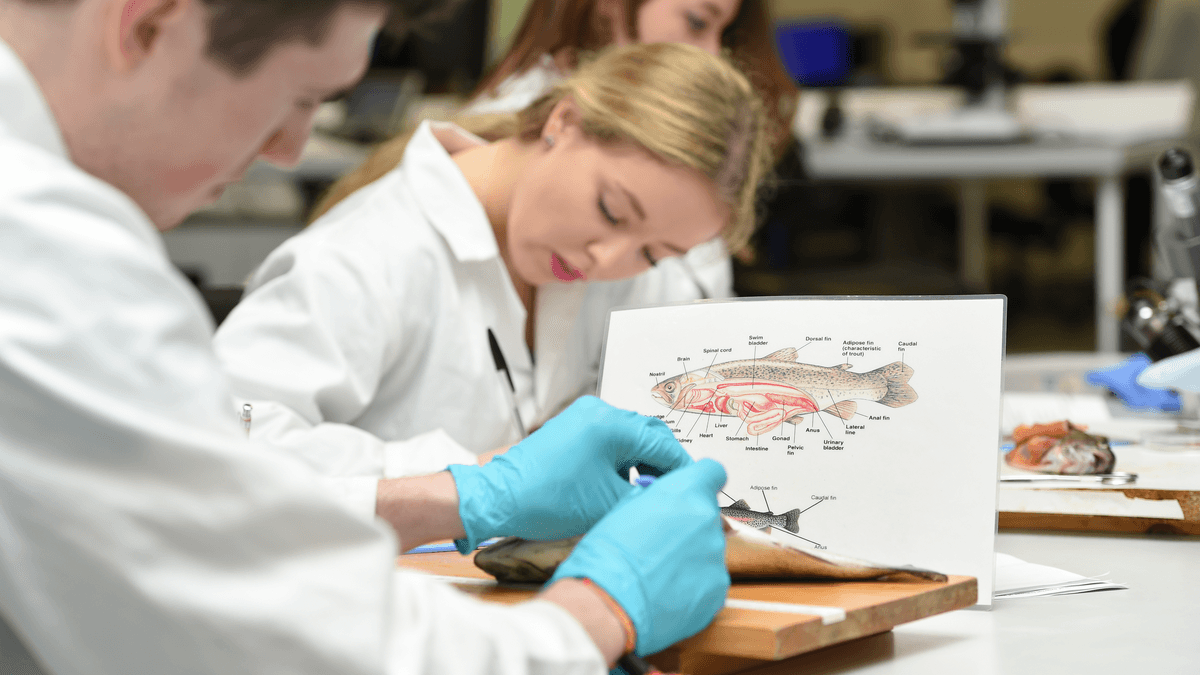
Stop treating study as just looking for facts; instead, see it as a series of practice experiments that show where you don’t understand things. Quickly fix these gaps by creating practice sessions that make you recall information, use different contexts, and notice your mistakes. This way, you’ll learn faster and waste less time.
To create practice that helps you transfer knowledge effectively, start by designing problems that omit some information. This will require you to fill in the missing parts. For example, take a test-like question and remove one crucial variable, then answer it from the beginning while explaining each step out loud.Use interleaving by switching between topics within a single session. This method helps you learn to choose the right model rather than just memorizing labels for diagrams. Treat each block of practice like an experiment: state a guess about what you think you will remember, do the recall test, note what went wrong, and then try again.
What kind of errors should I log and fix first?
Classify mistakes into three types and target each one differently: recall gaps, where you cannot remember a term or step; link gaps, where you can name parts but cannot explain how they connect; and transfer gaps, where you understand a process but cannot use it in a new situation. Keep a record of every mistake for two weeks, noting the type, the cue used, and how long it took to answer.This simple breakdown helps you spot patterns and stops you from re-practicing what you already know while overlooking weak connections. Additionally, using an effective AI study tool can significantly enhance your learning experience.
When is studying with others actually worth it?
Most people think group work is optional, but structured group practice can help improve understanding. This is especially true when roles are clear, and sessions stay focused. Use time-limited teach-backs, one-minute challenge questions, and rotating quizmaster roles to ensure the group alternates between explaining concepts and being tested. This is important because students who study in groups are 50% more likely to understand complex biology concepts.Choose group sessions for topics that require connecting ideas at different levels, and save solo time for personal retrieval practice. Combining group study with tools like our AI study tool can further enhance your understanding.
How do I build a durable checkpoint for a single topic?
To build a strong checkpoint, follow a two-step process before moving forward. In the first step, explain the topic in one minute using a voice note or short video, and include only five key terms. After that, write down what you described and underline the causal verbs.In the second step, within 24 to 48 hours, use that explanation to tackle a new problem that you either make up or pick from another chapter. This method encourages both compression and application, helping you practice actively and achieve better results. According to the UNC Learning Center, 80% of students who use active learning strategies report achieving higher grades.
What is the key analogy for understanding topics?
A quick analogy to help you understand this idea is to think of each topic as a small engine rather than a pile of parts. You need to run the engine, listen for any knocks, and then adjust the parts as needed. This approach is more effective than simply polishing each bolt and hoping the engine starts.
How can AI tools help with studying?
Transcript brings AI-powered study tools right to students' fingertips, speeding up the fix-feedback loop by changing notes and photos into focused practice. Use Transcript as an AI study tool when you need instant diagnostics, mixed-practice generation, and simple step-by-step explanations that highlight weak spots in your understanding.
Why do students struggle when hitting a learning wall?
That progress feels promising. However, when most students hit a wall, it can be quieter and more difficult than they expect. Using our AI study tool can help students overcome these barriers and enhance their learning experience.
What to Do Next If Biology Is Still Hard (and How to Start Improving Without Burning Out)
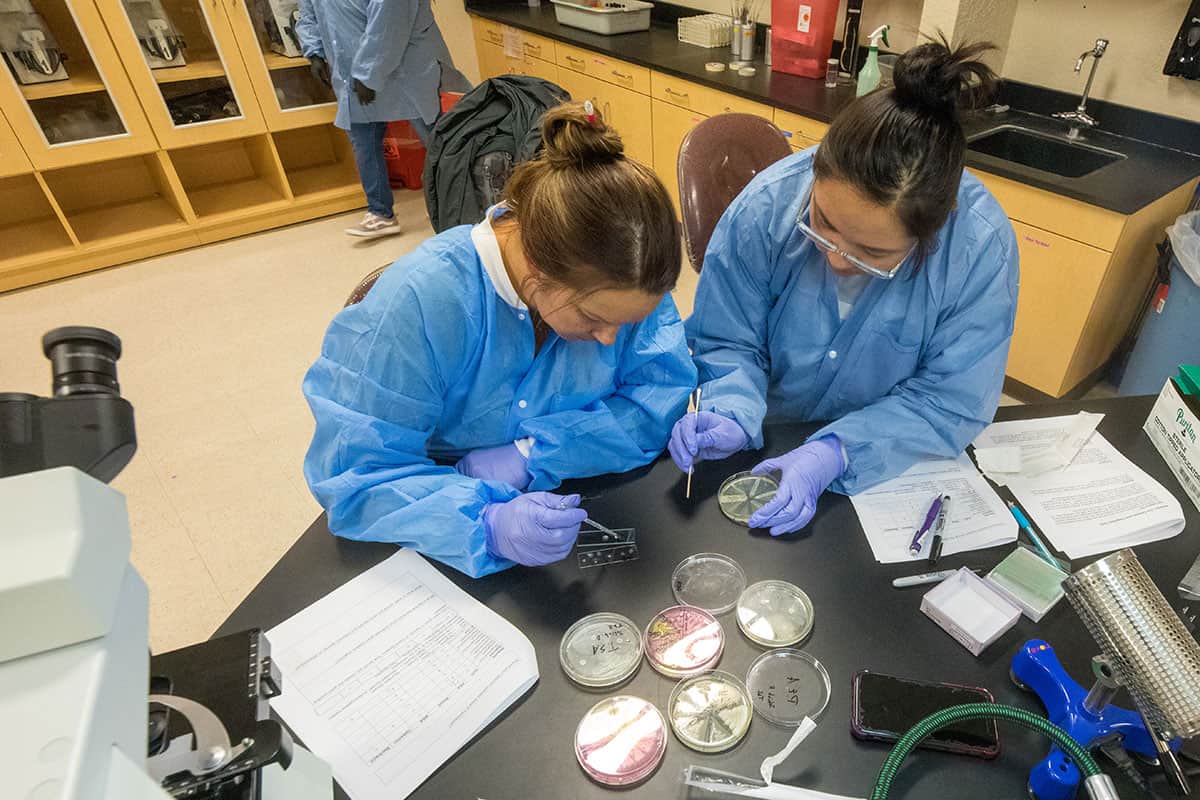
To improve your understanding of biology, start by choosing one tiny target. Practice it in short, measured sprints, and use others or a tool like Transcript to spot any confusion quickly. This method helps you avoid wasting time. The small, repeatable loop: choose, test, correct, repeat, works better than long catch-up sessions.
What single thing should I begin with?
Pick a process you know will show up on the next exam, then narrow your goal down to one specific step within that process. For example, instead of trying to "understand cellular respiration," you might aim to "explain how ATP yield changes when oxygen drops."Spend a focused 25-minute sprint on that one question, then take five minutes for a written correction. This micro-goal provides a precise before-and-after measurement, making it feel achievable rather than overwhelming.
How do I use confusion as a diagnostic instead of a dead end?
Turn confusion into a three-question checklist: Can you name the order of the steps? Can you state the causal verb that connects each step? Can you predict one outcome if a step doesn’t work?Time yourself to answer the checklist in 90 seconds, and then note which of those three questions you found hard. This quick check indicates whether the problem concerns ordering, causality, or application, helping guide your next practice drill. If you do this for two weeks, you will quickly see patterns, which is more helpful than hours of unclear review. Using an AI study tool like our Transcript can further enhance your practice by providing personalized feedback.
When is studying with others actually worth it?
Most teams stick to solo review because it seems efficient, but structured group practice is better when the goal is to uncover weak thinking. According to the Educational Research Journal, students who study in groups are 50% more likely to improve their grades.
Try using short, defined-role sessions: 20 minutes in which one person teaches while two others ask quick, challenging questions, then everyone rotates roles. Also, set a strict no-phone policy for the first five minutes so the group can identify any confusion rather than just searching online. This understanding saves significant time later.
Why start smaller than you think?
When trying to fix an entire chapter at once, people often end up focusing on maintenance rather than mastering the material. The usual method is cramming or staying up all night to study. While this may seem productive, it actually fragments memory and raises stress levels. This issue is reflected in the National Student Survey, 2023-10-01, which shows that 75% of students reported feeling overwhelmed by their biology coursework.On the other hand, doing small, focused tasks can help reduce mental overload. This approach allows each study session to lead to evident, repeatable progress, rather than temporary knowledge that breaks down under exam pressure. To support this strategy, our AI study tool can help break down complex topics into manageable segments.
What does a simple, repeatable routine look like?
Consider a four-day micro-cycle: Day one involves two solo 25-minute sprints, each focused on a separate micro-goal, with 5-minute corrections in between. On day two, conduct a 20-minute timed retrieval test covering both micro-goals. Day three features a 30-minute group session using the role protocol mentioned earlier. Finally, on day four, complete a 10-minute spaced practice session, teaching the topic aloud in under 90 seconds.Repeat this cycle weekly for three weeks before introducing a new micro-goal. This rhythm creates frequent, low-stakes checkpoints, ensuring unknowns do not pile up. To enhance this process, consider how our AI study tool can support your learning goals.
How can tools help with confusion?
Most teams handle confusion by re-reading or searching for the "right" explanation. While this approach is familiar and comfortable, it has a hidden cost: hours wasted trying to make sense of conflicting notes, broken study plans, and increasing anxiety that hurts recall. Solutions like Transcript offer an alternative approach. They change your question or a photo of notes into a clear, step-by-step exercise.These tools highlight the exact step you are struggling with and give back short prompts that can be used in a focused 25-minute sprint. Teams find that third-party tools help organize diagnoses and reduce time spent searching for answers, keeping the practice practical and corrective rather than repetitive.
What’s a tiny accountability trick that shifts momentum?
At the end of each sprint, write one sentence about what failed, why it happened, and the one action to take in the next session. Keep adding those sentences to a running log on a single topic. After three entries, you will see which mistakes happen often.This pattern will help you decide whether to continue working on the same micro-goal, take a different action, or discuss the issue in a group session. To enhance your review process, consider using our AI study tool to help identify patterns and insights.
How does this method make progress visible?
It’s exhausting when effort doesn't translate into progress. This method makes small wins visible, replacing vague hope with concrete feedback. Our AI study tool helps provide immediate insights into your learning journey.
The following piece presents a shortcut that actually gives you instant, actionable answers.
Get Answers for Free Today with Transcript
Long, unfocused review sessions may seem safe, but they hardly change practice into active recall or real problem-solving. Platforms like Transcript let users look up a problem and get step-by-step solutions.This smart notebook tracks errors during focused spaced practice and includes an AI chat that guides users through each step. It's like having a personal tutor with a photo, and you can get answers for free.