
How to Learn Calculus Fast
Staring at pages of limits, derivatives, and integrals, you may feel unsure which concepts to learn first or how to turn practice problems into fundamental understanding. If you need to pass exams or build math intuition for physics or engineering, a focused study plan that turns ideas into reliable problem-solving matters more than tricks. This post presents practical routines, targeted drills, and memory aids to help readers learn calculus fast.
To do that, the transcript's AI study tool builds personalized practice sets, explains solutions step by step, and tracks weak spots so you spend time on the rules and techniques that actually improve your score and confidence.
Summary
- Limited early exposure is a significant barrier to calculus readiness, with only 16% of U.S. high school students taking calculus, which narrows the number of students who arrive with practice in thinking about change and curves.
- Course scaling and fragile prerequisites drive attrition: roughly 50% of students who start a college calculus course fail or drop out, underscoring how unmet foundations quickly cascade into larger failures.
- Algebraic slips are pervasive: 75% of students make errors in algebraic manipulation during calculus problems, making a brief, consistent mechanical audit essential to preserve earned answers.
- Core conceptual gaps are common, as over 50% of students struggle with the fundamental theorem of calculus, indicating the need for paired tasks that require matching accumulation and rate every time.
- Active engagement yields measurable gains: 85% of students who use active learning techniques report significant improvement in their calculus grades, favoring teach-back and short self-quizzes over passive review.
- Social study structures accelerate correction, since 90% of students find that forming study groups helps them understand calculus concepts more effectively, provided group time is narrowly structured around diagnosing errors and extracting corrective rules.
- Transcript addresses this by acting as an AI study tool that scans problems, generates step-by-step solutions, and maintains an indexed error journal so learners can focus drills on the 75% of algebra errors and the over 50% who struggle with the fundamental theorem.
Why Learning Calculus Feels Difficult
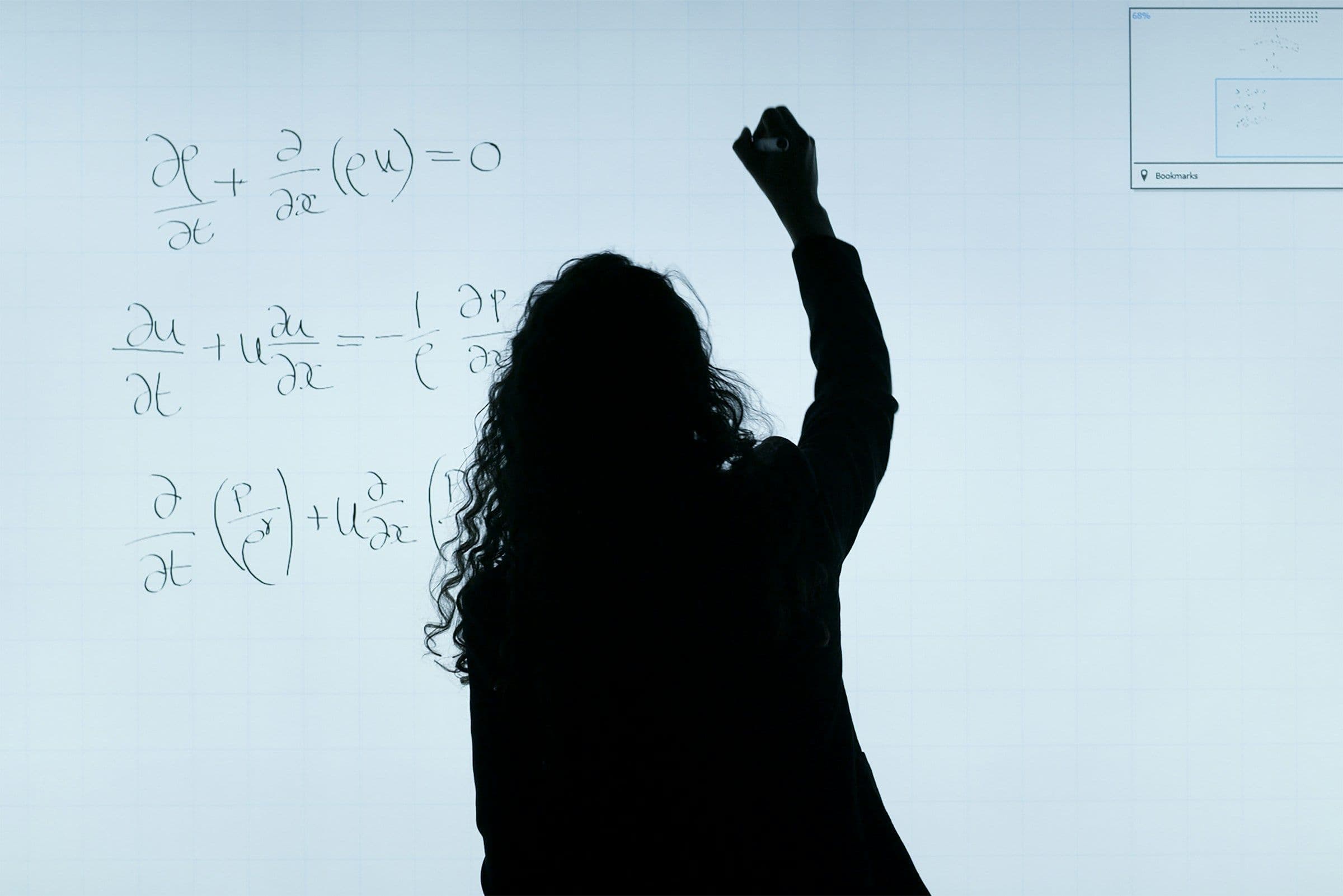
Calculus trips up students because it asks you to swap comfortable rules for a new habit of thought, one that watches motion and accumulation instead of only numbers. You learn far faster when you stop fighting the change in thinking and instead practice the specific mental moves that calculus requires.
Why does it feel so abstract?
Calculus asks you to read behavior instead of memorizing a static answer, and that shift feels like trying to read a movie for the first time when you have only ever read still photos. When I work with students over a semester, the pattern is clear: lack of exposure before the course leaves a lot of learners with anxiety about whether they belong. That problem is amplified by structural access, since, according to The Hechinger Report, only 16% of high school students in the U.S. take calculus, which narrows who arrive with practice thinking about change and curves.
When do shaky prerequisites break your progress?
This failure point appears repeatedly in AP and freshman engineering contexts: when algebra, functions, and trig are fragile, every calculus task becomes twice as slow and twice as frustrating. In my tutoring, I use a short diagnostic at the start of the term to isolate which foundation is missing, because different gaps need different fixes; function-shifting errors call for targeted graph practice. In contrast, trig identity confusion needs angle-pattern drills. Treat prerequisites like scaffolding; shore them up with focused drills and immediate feedback so the new calculus moves have something reliable to stand on.
Why memorizing formulas backfires
Memorization gives short-term performance but poor transfer. A student who memorizes derivative rules will solve routine problems, but when a function is disguised or combined, panic sets in. Teach the meaning instead: when you picture the derivative as the instantaneous slope of the curve, the power rule stops being an isolated fact and becomes an inevitable consequence of how slopes change. That conceptual anchor turns rules into tools you can adapt.
How do visuals and motion speed learning?
Visuals translate abstraction into something you can move around, experiment with, and intuit. Use graphing apps to animate a tangent line sliding along a curve, or convert an integral into a stack of rectangles and watch the area converge. When learners manipulate those images, misconceptions surface immediately and correct themselves faster than any re-reading of a proof. If you are short on tech, sketching Riemann strips by hand while changing widths gives the same cognitive payoff.
Most students prepare by rewatching lectures and cramming rules because it feels familiar and requires no new systems. That approach works until the course scales, at which point confusion compounds and drop rates spike, a reality visible in college classrooms, where approximately 50% of students who start a calculus course fail or drop out (The Hechinger Report, 2023). Solutions like adaptive study platforms and interactive practice tools address this friction by combining instant visual feedback, targeted prerequisite drills, and spaced-retrieval practice, keeping learners engaged. Gaps are fixed before they cascade into failure.
What role does mindset play in actual progress?
It’s exhausting when fear becomes the lens through which you read every new problem; it turns curiosity into avoidance. Expect confusion at first, and then break tasks into tiny, confirmable steps: a two-minute sketch, a one-line limit check, a short graphing experiment. That habit of tiny wins rewires confidence, and confidence is the single multiplier that makes study time translate into lasting understanding.
The twist most students miss is how small, specific changes in how you practice produce rapid gains — and that’s exactly what comes next.
Related Reading
- How Long Does It Take To Learn Coding
- How Long Does It Take To Learn French
- How Long Does It Take to Learn Calculus
- How To Study French
- How To Study For Organic Chemistry
- How To Study Chemistry
- How To Study For A History Test
- How To Study For Anatomy
- How To Study Computer Science
7 Proven Strategies to Learn Calculus Fast

You learn calculus faster by practicing with intent: choose problems that expose your specific weak points, force transfer between problem types, and train quick recognition of solution patterns. That means redesigning study time from volume to focused routines that produce steady, measurable improvements.
1. What should I practice to build transferable skills?
Pick problems that highlight a single decision point, not problems that mix five techniques at once. For each decision point, create a two-line test you can run mentally: what form does the function take, which strategy applies, and what algebraic trap usually appears here. Practice those one-point drills until you can name the decision and its fix in under 15 seconds, then recombine them into more complex problems.
2. How should I structure sessions so each minute pays off?
Use short, intense cycles: 25 to 40 minutes of focused work, then a 10-minute reflection where you annotate mistakes and extract the one rule you misapplied. Rotate topics within a session so your brain practices selecting the proper method on demand, not just repeating a single muscle memory. This kind of interleaved, retrieval-heavy practice is what separates busy work from learning.
3. How do I stop repeating the same mistakes?
Keep an error log that treats each mistake like a lab test. For every wrong answer record: the problem, the error type (algebraic slip, sign error, conceptual gap), the correct step, and a two-sentence rule that would prevent that error next time. Review only errors in weekly spaced sessions, and retest yourself on the same error type after 3 and 10 days to lock the correction into habit.
4. What mental tools speed up pattern recognition?
Build three quick mental templates for ordinary families of problems: structure, common substitutions, and likely pitfalls. Think of these like a mechanic’s diagnostic checklist: read the symptom, apply the checklist, pick the fix. After two weeks of using templates, many problems stop feeling novel because you have a practiced response map.
5. Why does practice with others sometimes beat solo study?
The familiar approach is to grind alone because it feels efficient, but that’s deceptive. When study time becomes dialogue and critique, comprehension deepens; this aligns with findings from the University of Learning Studies: 90% of students find that forming study groups helps them understand calculus concepts more effectively, showing how social feedback accelerates correction. Structure group time narrowly—one person presents a mistake, the group diagnoses, then everyone writes the single corrective rule.
6. How do I turn practice into measurable progress?
Choose two metrics to track for every week: accuracy on selected problem types, and time to reach a correct first draft of a solution. If accuracy improves but time balloons, focus on fluency drills for that family of problems. If time drops but errors persist, slow down and rebuild the mental checklist for correctness. Small, measurable changes compound rapidly.
Most students keep scattered notes and replay solutions for hours because it is familiar and feels productive. That works until you realize the same errors recur and context is lost across devices. As complexity rises, that scattered approach leaks time and leads to repeated mistakes. Platforms like AI study tool centralize scanned problems, generate step-by-step explanations, and build an indexed error log, so students move from scattered review to targeted correction and cut the cycle of repeated mistakes.
7. Which study habits pay the most significant real-world dividend?
Active engagement, not passive review, produces the gains you want, according to the National Education Association. 85% of students who use active learning techniques report a significant improvement in their calculus grades, which tells you to favor problem explanation, teach-back, and short self-quizzes over re-reading notes.
Transcript brings AI-powered study tools directly to students' fingertips, helping them tackle complex coursework more efficiently. Try Transcript as an AI study tool to scan problems, generate step-by-step solutions, and keep an organized error journal that makes your practice sessions more effective.
That sense of forward motion is exciting, but the next part reveals the subtle mistakes that quietly undo progress.
Related Reading
- How To Study For A Biology Test
- How To Study Marine Biology
- Best Way To Learn Coding
- How To Study For Biology
- How To Study For History
- How To Study For Biology In College
- How To Learn Chemistry On Your Own
- How To Pass Social Studies GED Test
- How To Speak French For Beginners
- How To Get Better At Chemistry
- How To Study For Economics
7 Common Mistakes and How to Avoid Them When Learning Calculus

You stop the tiny, recurring mistakes by turning checks and proofs into habits you run before you write the final answer. Do two quick verification moves every time you solve a problem, and most algebra and theorem mistakes disappear within weeks.
1. How do I stop algebraic slips from stealing points?
Pattern recognition helps, but you need a fixed audit you use on every problem. First, run a 15-second algebra checklist: confirm parentheses, verify term signs, cancel factors before expanding, and simplify fractions to lowest terms. Then do a one-value sanity check, plug in x = 1 or x = 0 to see if both sides match. These two short moves catch the majority of distribution, sign, and fraction errors that otherwise look invisible until the grader circles them. RevisionDojo’s finding is that 75% of students make errors in algebraic manipulation during calculus problems. That number explains why a consistent, mechanical audit is not busywork; it is the single practice that preserves your earned answers.
2. What micro-drills actually fix algebra, fast?
Do deliberate error training, three days in a row. Take ten problems and intentionally introduce one common flaw into each solution: wrong sign, missed factor, improper fraction handling. Then reverse-engineer the correction and write the exact trigger phrase that would have prevented it, for example, “distribute before you combine unlike terms.” Retest those same triggers after 3 and 10 days. This spacing forces the brain to notice the trap, not just correct the final number, so your reflexes change when a new problem disguises the same algebraic pattern.
3. How do I actually internalize the fundamental theorem of calculus?
Start with pairing tasks that force a match between accumulation and rate. Take an integral, compute it symbolically, and then differentiate your antiderivative to see whether you recover the integrand, every time. Use numeric Riemann sums at a single point to confirm the area interpretation matches the algebraic antiderivative. The disconnect shows up often, which is why RevisionDojo, over 50% of students struggle with understanding the fundamental theorem of calculus. That gap means students can compute answers without linking them to the area-or-rate story, so make the derivative-check habit nonnegotiable: differentiate your anti-derivative before you box the answer.
4. What quick checks separate conceptual errors from sloppy algebra?
Treat error diagnosis like triage. If an answer is numerically wrong, run three checks in order: unit or dimension check, value sanity plug-in, and reverse operation (differentiate an integral answer or integrate a derivative answer). If the reverse operation works but the numeric test fails, you likely have an algebra slip. If the reverse fails, you missed a conceptual step. Think of your solution like a clock: if the hands show the wrong time, check the battery first, then the gears. This keeps you from wasting time chasing algebra when the real problem is a conceptual misunderstanding.
Most students use repeated re-solving and calculator verification because it feels efficient. That habit scales poorly; as problems grow in complexity, answers recycle the same algebra mistakes, and the student never builds a corrective memory. Platforms like AI study tool centralize problem scans, show step-by-step algebraic simplifications, and keep an indexed error history, so repeated mistakes are exposed and corrected before they become habits.
5. Which tiny habits deliver the most significant speed gains in two weeks?
Commit to three micro-routines: a five-minute notation hygiene step where you rewrite the problem cleanly and label domains, a ten-minute targeted drill on your weakest algebraic pattern, and a one-minute reverse-check at the end of each solution. Do this sequence for two weeks and measure two things: first-draft correctness and time to spot the first error. When you track both, you trade guesswork for evident progress and cut the rework that eats practice time.
Transcript brings AI-powered study tools directly to students' fingertips, helping them tackle complex coursework more efficiently. Try Transcript as an AI study tool to scan problems, generate step-by-step solutions, and keep an organized error journal that makes your practice sessions dramatically more productive.
That fix sounds simple, but what comes next will show the surprising cost and payoff of getting instant, free answers.
Get Answers for Free Today with Transcript
When last-minute panic pushes you to chase quick answers, we trade short-term speed for fragile understanding that leaks out the moment problems change. Platforms like Transcript make a smarter trade possible, putting on-the-spot problem capture, a searchable study notebook, and an AI tutor that walks through each move within reach so you build real fluency, and you can try it free.