5 Best Coding Languages to Learn and Earn $2k Monthly
Balancing abstract concepts with practical coding can transform challenging subjects into valuable skills. Clear, hands-on programming techniques simplify complex ideas and open doors in web development, data science, automation, and freelance work. Mastering languages such as Python, JavaScript, and Java enables you to build tangible projects that generate steady income.
Integrating analytical study with coding practice bridges the gap between theory and profitable outcomes. Real-world coding projects enable learners to translate academic learning into career advancement, making the learning process both engaging and rewarding. Transcript's AI study tool offers concise lessons, interactive practice, and tailored project prompts to accelerate the transition from study to earning.
Summary
- Most beginners struggle because introductions treat coding as memorization rather than as a habit, and approximately 70% of beginners report finding a coding language challenging due to its initial complexity.
- Short, focused practice outperforms passive review: 60% of learners report that consistent practice helps them overcome early coding difficulties.
- Skipping upfront planning fragments sessions and wastes time, a behavior reported by 60% of coding beginners and linked to long, unproductive practice sessions.
- Weak version control habits hide mistakes and slow recovery; research shows that 75% of new programmers do not use VCS effectively.
- Project-centered, outcome-driven learning maps to career results, reflected in over 70% of developers being self-taught.
- Concentrated, outcome-driven formats sustain completion and skill transfer, with coding bootcamps achieving over 90% graduation rates, and learners who ship three revenue-generating projects in the first two months gain the judgment that converts practice into income.
- This is where Transcript's AI study tool fits in: by scanning problems, offering step-by-step solutions, and maintaining an intelligent notebook, so learners spend less time stuck and more time delivering results.
Why Learning a Coding Language Feels Difficult
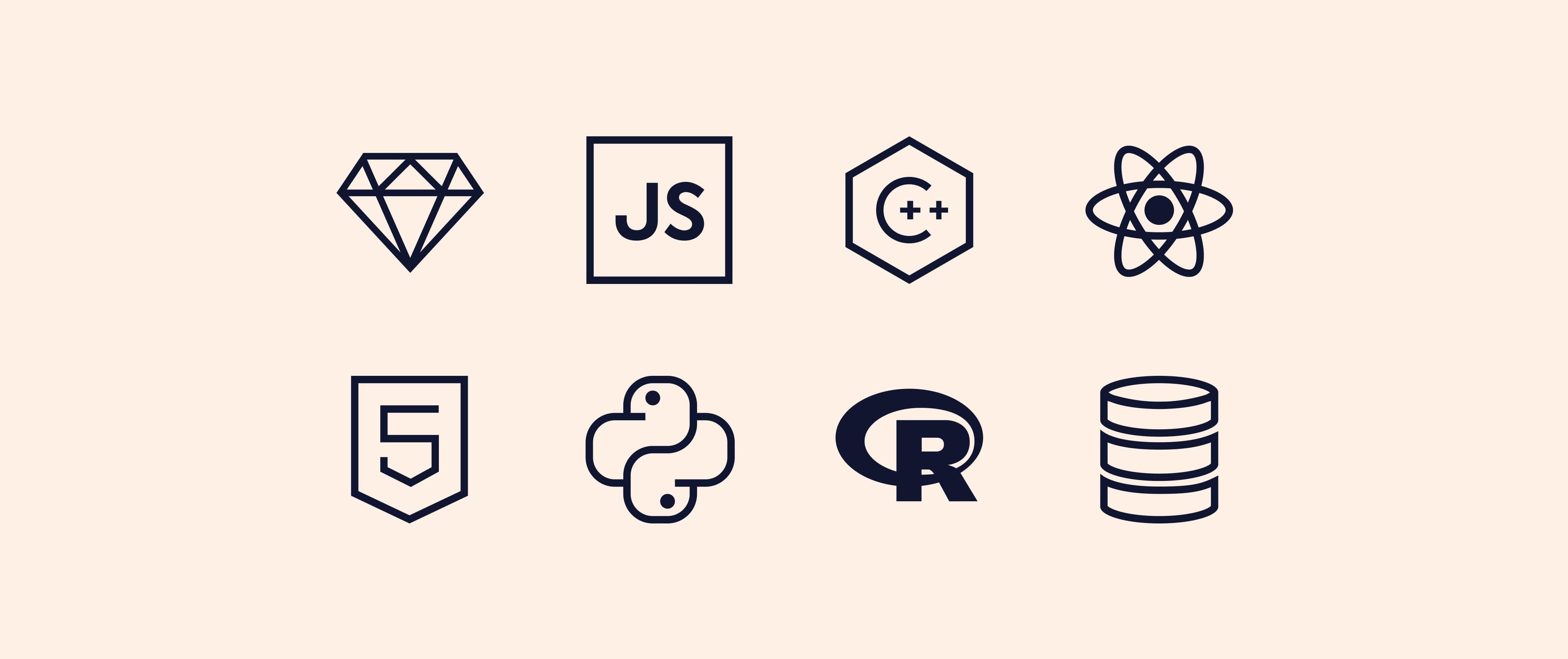
You’re not failing because you’re not smart; you’re failing because most introductions to coding make you think of it as memorization. Instead, coding should be seen as a set of practical habits that you develop over time. This difference, more than your ability, is why learning a language seems impossible at the beginning.
Why does it feel like I need to cram everything?
After working with beginner cohorts in a six‑week program, a clear pattern appeared: students often look at a page full of keywords, symbols, and examples. They feel they must remember everything before they can move on.This pressure makes reading feel stressful, as if it were preparing for a test rather than learning a skill. Research shows that about 70% of beginners find programming languages difficult due to their initial complexity. This was noted in a 2023 discussion that highlights how common this initial overload is.
Why does watching look easier than doing?
Watching a tutorial takes away choice; viewers see decisions that have already been made. In contrast, doing something requires making choices about variable names, data flow, and testing locations. This mental jump reveals gaps that passive watching hides.When learners shift from passive watching to short, focused practice sessions, they move from copying to creating, a critical step in skill development. To support this transition, our AI study tool can help create engaging practice sessions tailored to individual learning styles.
Why do tiny mistakes derail everything?
Code can be unforgiving at first, making it hard to learn. A single missing bracket can stop your work for an hour and make you feel inadequate. The real solution is in procedure, not just motivation. If you teach yourself a three-step debugging routine and run small tests every few minutes, you can stop little mistakes from turning into big problems that take hours to fix.
How do you start when you don’t know what to type?
Begin with structure, not syntax. Students should write simple English comments that explain what they want to do. Then, they can turn one comment into two lines of code. This small rule takes away confusion.By planning the flow first, typing becomes a way to create, not just make things up. If you’re looking for a way to assist in structuring your study sessions, our AI study tool can help streamline your learning process.
What happens when you compare yourself to others?
People who seem confident have practiced certain habits for months or even years, while keeping their early difficulties hidden. When you compare your first drafts to finished work, you miss important context.Instead, reframe comparison as mapping, not judging: find one small pattern someone has used, copy it, and then keep improving. Consider using our AI study tool to support your learning process and enhance your skills.
How do you know you’re learning the right thing?
Create a goal map by linking a specific, small project to a single idea, then test that idea.Learning isolated syntax without a clear target wastes time; having a target helps guide your decisions and shows what is truly important for your goals.Using an AI study tool like our Transcript helps you focus on key concepts relevant to your projects.
What is the common approach to beginner learning?
Most teams help beginners learn by providing lengthy tutorials and reference documents. This method seems complete and cost-effective, and it's easy to see why it's popular. But the hidden problem is fragmentation. Learners often waste hours trying to connect the dots, lose their motivation, and eventually stop practicing.Platforms like Transcript provide incremental, contextual hints, runnable examples, and immediate checks. This helps learners receive specific feedback and achieve steady wins, enabling them to move from confusion to competence more quickly.
What Actually Changes Things for Learners?
Practice that sticks, not grind. Sixty percent of learners report that consistent practice helps overcome initial coding difficulties. This is why small, scheduled sessions are more effective than long cram sessions. To build micro-habits: one failing test, one fix, one commit. Over time, these habits build muscle memory and confidence.
What is the solution for confusing resources?
It's tiring when resources are made by experts who forget how hard it is when you first start learning. The answer is to provide materials that anticipate potential confusion and include scaffolding, checkpoints, and opportunities to correct mistakes.This human-first design helps learners stay on track rather than get stuck. Additionally, using tools like our AI study tool can provide the support needed to navigate challenging concepts.
What deeper issues affect beginners?
Underlying frustrations among beginners often come from deeper issues. The next section reveals the hidden errors that nearly every newcomer faces, which can sometimes be addressed with tools like our AI study tool.
Related Reading
- How Long Does It Take To Learn Coding
- How Long Does It Take To Learn French
- How Long Does It Take to Learn Calculus
- How To Study French
- How To Study For Organic Chemistry
- How To Study Chemistry
- How To Study For A History Test
- How To Study For Anatomy
- How To Study Computer Science
8 Common Mistakes Beginners Make When Learning Coding

The focus should be on processes and tools, not talent. Many beginners skip planning, avoid version control, and treat errors as personal failures. These habits create fragile routines that break down when problems arise. By changing how they approach tasks, learners can achieve consistent skill from the same hours of effort, turning chaotic frustration into productive learning.Consider utilizing an AI study tool like Transcript to enhance your learning experience.
Why Does Skipping Planning Make Every Session Feel Chaotic?
When learners skip planning, they overload their working memory with choices that could have been sorted out earlier. This extra trial-and-error distracts from the task and can turn a 30-minute practice session into a three-hour session filled with uncertain edits. According to Educative Blog's "60% of coding beginners skip the planning phase before starting to code." This is a common issue and often results in sessions ending with a drawer full of half-finished files rather than finished ideas.The practical solution is straightforward: reduce the upfront choices by writing a one-paragraph intent, listing two inputs and one output, and selecting just one test to pass first. This limit not only narrows options but also preserves focus, ensuring every attempt shows a clear learning signal. Additionally, using a reliable AI study tool can help you stay organized and keep your learning sessions effective.
How do weak version control habits steal your learning history?
Poor VCS use makes mistakes hard to see and recovery costly. Research from Educative Blog's "75% of new programmers do not use version control systems effectively." Shows how common this is. Without small, meaningful commits and clear messages, it's hard to determine when a problem started. This lack of clarity makes it difficult to revert to earlier versions and hinders safe experimentation.Treat commits like learning checkpoints: commit the smallest meaningful change, add a one-sentence note explaining what you did, and share that history. This habit turns mistakes into an auditable timeline you can learn from, rather than a pile of shame to discard.
What cognitive rules make errors teachable instead of terrifying?
Errors become useful when you explain what they show. Think of every failed attempt as a hypothesis test: what specific assumption did I make that might explain this failure? Then, use binary isolation by removing or testing one variable at a time until the failure changes. This approach turns panic into focused experiments, making it easier to answer the question of where to start.To improve learning, adopt simple habits that reduce emotional stress. For example, save a copy before making a risky change, add a plain-English comment explaining what you want to happen, and treat each small fix as clear evidence of progress. These habits shift the coding experience from merely performing to a series of small discoveries.
How do platforms help retain context in learning workflows?
Most teams handle learning workflows by leaving errors and history scattered across local machines and chat threads. This approach is familiar and requires no additional setup.While it may work for a short time, as projects or practices grow, context is lost, regressions creep in, and the time required to diagnose problems increases. Platforms like Transcript offer versioned, runnable checkpoints, inline test runners, and guided prompts. These features keep the intent clear and lower context switching.As a result, learners can work faster while keeping a clear record of what changed and why. Additionally, our AI study tool helps streamline this process.
How do you stop switching languages before you build fluency?
Changing languages often feels like progress, but it breaks up pattern recognition. A helpful rule is constraint-first: choose one language for six weeks, use it on at least three different problems, and make yourself reuse the same phrases in your answers. This challenge reveals deeper patterns, and its repetition builds transferable reasoning skills, helping you learn a second language more quickly. In practice, think of each language as a means to solve problems, not a final goal; fluency comes from reuse, not just from exposure.
Why should you treat mistakes as data instead of judgment?
It’s exhausting to watch someone freeze when a simple typo breaks everything. This panic can be avoided if mistakes are viewed as data rather than as judgment. Our AI study tool helps turn errors into valuable insights for better learning.
What complication arises after initial learning?
The real complication comes next, changing everything about how someone should practice.
Related Reading
- How To Study For A Biology Test
- How To Study Marine Biology
- Best Way To Learn Coding
- How To Study For Biology
- How To Study For History
- How To Study For Biology In College
- How To Learn Chemistry On Your Own
- How To Pass Social Studies GED Test
- How To Speak French For Beginners
- How To Get Better At Chemistry
- How To Study For Economics
How to Learn Coding the Right Way (So It Finally Clicks)

Create a repeatable learning system that treats each study session like a tiny product sprint. Define a narrow deliverable, write the tests or acceptance checks it must pass, and then iterate until those checks pass. This structure keeps practice honest and turns vague effort into measurable progress, which can greatly benefit from our AI study tool.
What should each practice cycle actually produce?
Start every session by writing one acceptance criterion in plain English. Then, translate that into a runnable check or a simple manual checklist. Treat the check as the goal, not the code.By forcing yourself to prove that the feature works before declaring it complete, you stop chasing vague ideas and start producing small, reliable results.
How do you design experiments that force real understanding?
Frame each exercise as a hypothesis: if I implement X in Y way, then test Z will pass. Limit the focus to one user action or change, and isolate factors by stubbing external calls or reducing inputs.
Run the cycle in two parts, spaced 48 to 72 hours apart: first, implement minimally; then run the test, assess failure modes, and improve.This rhythm shows which concepts are brittle and which become automatic and fast.
Why choose project-driven resources over another tutorial?
The career path into coding is often unusual. This is why hands-on, self-guided routes work well. Research from CareerFoundry (2023) shows that over 70% of developers are self-taught, underscoring how independent, project-based practice leads to real job outcomes.This situation supports creating a curriculum that focuses on deliverables and feedback, rather than relying solely on passive video consumption.
How can teams manage learning workflows effectively?
Most teams manage learning workflows by spreading examples across local folders and chat threads. This approach works well at first because it is familiar and requires no new setup. However, as practice grows, context breaks down, mistakes can be lost, and getting back to prior ideas becomes expensive.Solutions like Transcript gather runnable checkpoints, inline tests, and versioned history in one place. This allows learners to improve with the same clear purpose that professional teams use, effectively shortening the feedback time between a mistake and a fix. With AI study tools, teams can further enhance their learning efficiency.
Can an intensive, structured path actually help learners finish?
Can an intense, structured path actually help learners finish? Concentrated programs show high completion rates because they require specific results. For example, CareerFoundry (2023): Coding bootcamps have a graduation rate of over 90%, showing that focused, outcome-driven formats significantly improve completion.Learners can copy that intensity by scheduling short sprints, using peer reviews or checklists for accountability, and treating each commit as a testable learning increment. Additionally, utilizing an effective AI study tool like our product can help streamline your learning process.
How will you measure progress toward paid work?
Track deliverables, not hours. Useful metrics include the number of items that pass acceptance checks, the time it takes from the first failing run to a passing build, and the number of independent deploys you can show in an interview. Aim for a portfolio where each item solves a clear problem and has at least one test or live demo.Employers prioritize reliability and reproducibility over just finishing tutorials. Utilizing our AI study tool can help you track these metrics effectively.
What Does a Structured, Test-First Approach Prepare You For?
A structured, test-first approach helps developers prepare for their next decision. The language chosen at this point will quietly affect whether months of hard work translate into income or result in further adjustments. To support this process, our AI study tool offers tailored resources that enhance learning and preparation.
5 Best Coding Languages to Learn and Earn $2k per Month

Choose the language that directly matches the service you can sell in the next 4 to 12 weeks, rather than picking the one that sounds the coolest. For quick freelance money, JavaScript is great for website work, Python is best for automation and data tasks, and SQL gives you a high-value, focused skill. Java and C# are better if you want to get steady salaried jobs.Our AI study tool can help you enhance your programming skills and prepare for projects more effectively. Focus on a specific project type aligned with the chosen language, and complete three paid or demo projects before considering a change.
1. How can JavaScript get me paid the fastest?
JavaScript makes it easy to do visible, billable work quickly because it runs in both browsers and simple backends. Start by learning HTML and CSS to properly structure a page. Next, learn the basics of JavaScript DOM and a deployment platform, such as Netlify or Vercel.Create a repeatable product, such as a one-page business site that you can finish in 1–3 days. Price it as a package that includes a fixed scope, one revision, hosting setup, and a small maintenance upsell. This clarity helps turn practice into a predictable sale.
2. Why choose Python for automation and data gigs?
Python reads like plain English and connects easily to CSVs, Google Sheets, and basic APIs. This ability leads to big-time savings that clients will pay for. It's important to learn file I/O, loops, functions, and a library for scraping or connecting to Sheets. You can automate a real office task; for example, you could consolidate monthly reports, rename and archive files, or create a weekly KPI spreadsheet.
Present this as a short-term contract with clear results, such as saving 5-10 hours per week, and align it with the ideal time your business should spend on social media marketing. This shows the return on investment (ROI) clearly to a buyer.
3. When is SQL the better short path to income?
If you want the highest hourly income, go straight to SQL. This tool addresses critical business questions companies cannot ignore. Master commands like SELECT, WHERE, GROUP BY, and JOINs. Then practice taking useful metrics from sample datasets.Position yourself for junior analyst roles or freelance reporting by creating a single, clean, repeatable dashboard or monthly report that supports a clear decision, such as customer churn or top-performing product performance. Additionally, using effective resources like our AI study tool can further enhance your learning experience.
4. Should I pick Java or C# now if I want steady employment?
Choose Java if you want a traditional backend role with clear career paths. Choose C# if you like Windows environments, .NET jobs, or working with Unity. Begin by learning the basic language skills and one toolset for each ecosystem: Spring Boot for Java or ASP.NET for C#.Create a simple API or console tool you can showcase, then use it to pass coding tests and interviews for entry-level roles. Additionally, our AI study tool can help you master these languages and practices.
5. What pricing and client strategy actually work?
A narrow scope and clear deliverables deliver better results than simply lowering prices. Offering three product packages, quick fix, small project, and ongoing support, with specific deliverables and timelines, can attract clients more quickly.For your first clients, consider swapping results for testimonials instead of offering low rates; a $200 paid test project with a short testimonial can generate many $500–$1,500 projects in just a few weeks. Using an AI study tool like our Transcript can streamline the process and enhance your project outcomes.
How do I build trust and reliability with clients?
Many learners create tutorials, Stack Overflow answers, and unfinished projects because this approach feels familiar and doesn’t require new processes. However, as the scope and client expectations grow, the work becomes more fragmented. Clients then request changes that take significant time, which can erode trust. Tools like the AI study tool organize problem-solving, provide runnable examples, and offer step-by-step fixes.This helps learners move from mistakes to solutions more quickly while maintaining context, ultimately reducing the time required to produce reliable work. To enhance your learning experience, consider how our AI study tool can streamline your workflow and improve efficiency.
What habits can help speed the path to paid work?
A consistent pattern emerges: individuals who launch three small, money-making projects within the first two months develop practical judgment, improve their debugging skills, and create a portfolio that works. By treating each project like a mini business case, they move from learning abstract ideas to solving real buyer problems.This change in focus sets apart those who just gather words from those who actually earn a living. As they build their skills, integrating an AI study tool like our Transcript can greatly enhance the learning experience and help streamline the path to success.
How do you avoid scattering attention across languages and tools?
Use a six-week constraint: choose one language, one project type, and one deployment target. Then, run three iterations with a smaller scope and faster turnaround. This constraint encourages you to reuse idioms and patterns, which helps speed up the process for new clients and problems. Think of each week as a test cycle: ship your work, collect feedback, and make improvements for the next iteration.
Which habits speed the path to paid work?
Schedule three focused sessions per week, each lasting 60–90 minutes. Each session should include one acceptance criterion and one outreach or listing action to identify a buyer.This plan pairs technical progress with market validation. The emotional reward is immediate; visible wins build confidence, and confident messages attract clients.
How can AI tools help with coursework?
Transcript brings AI-powered study tools directly to students' fingertips, helping them handle complex schoolwork more easily. The platform is a useful AI study tool that analyzes problems, provides step-by-step solutions, and maintains a smart notebook. This method allows students to spend less time feeling confused and more time getting results.
What is the importance of iterative learning?
That simple change feels like a relief at first. However, the next step surprises most people and is often overlooked.
Get Answers for Free Today with Transcript
When faced with a complex calculus problem late at night, familiar habits, such as rereading notes or searching the web, often keep students stuck. This makes practice feel more like guesswork. A transcript can change that.This platform functions as a pocket tutor, scanning problems to provide instant, step-by-step explanations. It also saves worked solutions in an intelligent notebook. This helps users follow a clearer learning path, build repeatable problem-solving habits, and get answers for free with Transcript.
Related Reading
- How To Learn Spanish
- How to Study Geography
- Best Website to Learn Coding
- How to Study Linear Algebra
- How to Study for Accounting
- How to Learn Coding for Beginners
- How to Study Science
- How to Study Sociology