
How To Study For Anatomy
Studying anatomy requires focused practice, analogous to techniques used to master complex subjects, such as How to Learn Calculus Fast, where spaced repetition and active recall make a significant difference. Clear routines, visual mapping, and mnemonic aids transform cadaver lab challenges into manageable, structured sessions. These methods build a strong foundation of understanding while making study sessions more efficient.
Structured resources like anatomy atlases and comprehensive flashcards help reinforce memorization and practical application. Enhanced tracking through dissection notes and timed quizzes supports steady progress and confidence in the material. Transcript offers an AI study tool that builds personalized flashcards, schedules spaced repetition, and generates practice quizzes to streamline the study process.
Summary
- Anatomy is overwhelming because textbooks list more than 1,500 terms and structures, which can lead students to try to learn everything at once. In contrast, those who sequence learning into smaller, connected chunks make steady progress.
- Anatomy is spatial, not abstract, and approximately 70% of students report that visual aids significantly improve understanding; this explains why passive label reading can cause left-right and depth confusions unless layered visualization is employed.
- Memorization without structure causes rapid forgetting and practical errors, and over 60% of medical students report anatomy as the most challenging subject, pointing to study design failures rather than individual aptitude.
- The forgetting curve is steep: approximately 90% of information is lost within a week if not reviewed. By contrast, repetition can improve retention by up to 80%, so spaced, corrective retrieval is essential.
- Learning anatomy reliably depends on four habits: active recall, spaced repetition, layered visualization, and contextual application, because combining these practices produces steady gains rather than short-lived fluency.
- Timing and practice format matter: schedule more difficult retrieval sessions approximately 6 to 12 hours before sleep, and use short 30-minute blocks with desirable difficulty to convert effort into durable memory.
- Transcript addresses this by generating targeted retrieval prompts, scheduling spaced repetition, and converting scanned diagrams into layered, mixed-format quizzes that focus repairs on specific misconceptions.
What Is Anatomy and Why Do So Many Students Struggle With It?

Anatomy studies the body's parts and how they fit together. Learning it requires memorizing names, mapping locations, and understanding relationships in three dimensions. Success comes when names become anchors for spatial patterns rather than just vocabulary to forget after an exam.
Why does the volume feel impossible?
The list of structures is long and precise, and that exactness is what confuses people. The textbook you face includes over 1,500 terms and structures, as noted by the VOKA team, which is why the first weeks can feel like learning a new language overnight. After teaching many groups throughout a semester, the pattern became clear: students who try to remember everything on day one struggle quickly, while those who break their learning into smaller, connected parts make steady progress.
How does the subject’s visual nature change how you study?
Anatomy concerns space, not merely theory. You must examine depth, orientation, and closeness, which requires active visualization, repeated drawing, or the use of 3D models until the relationships make sense.Students often confuse left and right, or superficial and deep, when they just read labels. Reading doesn't build the mental model as well as dissection labs, layering exercises, or interactive models.
What breaks when memorization is the only strategy?
Memorization without structure leads to rapid forgetting and mix-ups. The failure point usually happens during exams that require the use of knowledge. For example, a student who memorized the name of a nerve but did not understand its path is likely to confuse its branches during clinical reasoning.This shows why short, focused retrieval practice that links name, position, attachment, and function is more effective than memorization alone. In this context, our AI study tool provides a structured approach to reinforce memory.
Why do small gaps cascade into big problems?
Anatomy builds on itself. If students miss elemental planes, directional terms, or small regional landmarks in week two, later modules will require them to relearn under pressure. This shows why consistent review and early correction are more critical than occasional marathon cramming.When students fall behind in the first three weeks of a course, catching up often means reworking several topic chains. This can be tiring and discouraging, making our AI study tool an excellent resource for keeping on track.
What does learning anatomy well actually require?
You need four important habits: active recall, spaced repetition, layered visualization, and contextual application. Active recall facilitates memory for names and relationships. Spaced repetition allows you to review material over time so details become part of your long-term memory. Layered visualization shows how structures are arranged in depth.Contextual practice connects what you learn about anatomy to movement or function, so it doesn't stay just as theory. This mix explains why students who change their study methods show consistent progress rather than sudden bursts of short-term understanding. To optimize your study methods, consider how our AI study tool can support your learning journey.
Is struggling a sign you’re bad at this?
No. Approximately 70 percent of medical students report difficulty learning anatomy, according to the study titled "Why Is Anatomy Difficult to Learn?" The Implications for Undergraduate Medical Curricula.
This indicates that the problem lies more in learning design than in individual ability. It’s tiring when hard work doesn’t lead to understanding, but that tiredness is a sign, not a judgment; it shows which study methods to improve.With the right tools, such as our AI study tool, enhancing your understanding can become much easier.
How should you think about anatomy learning?
Think of anatomy as a three-dimensional map that you learn by exploring the streets instead of just memorizing place names from a list. The right practice, such as using our AI study tool, transforms unknown paths into routes you navigate automatically.
What will we explore next?
This problem is solved on paper, but a minor issue arises that causes it to fall apart. This twist is where the next section will become practical and unavoidable.
Related Reading
- How to Learn Calculus Fast
- How Long Does It Take To Learn French
- How Long Does It Take to Learn Calculus
- How To Study French
- How To Study For Organic Chemistry
- How To Study Chemistry
- How To Study For A History Test
- How Long Does It Take To Learn Coding
- How To Study Computer Science
10 Specific Ways to Learn Anatomy Effectively

Learning anatomy effectively depends on an effective study design, not on how many hours you study. You achieve success by practicing retrieval, finding errors early, and turning images into lasting cues that help during exams.
To organize each study block for real memory retention, start every session with a clear, testable goal. Then, create a two-step loop: first, try to recall the information, and then check the evidence. This loop makes mistakes clear. When you forget something, correct the error immediately and rephrase what you want to remember.Sessions that follow this method build a memory that can handle guessing under time pressure; you train your brain to identify and address the specific gaps that cause errors. Our AI study tool is designed to assist in this process, facilitating monitoring of your learning progress.
1. What breaks when students try to “cover” everything in one sitting?
This pattern happens in first-year courses and summer bootcamps. When many topics are crammed into long lectures, it creates a fragile familiarity that disappears under pressure. The problem is not just forgetting random facts; instead, it is confusing recognition with recall. Students can confidently refer to a labeled diagram, but they might struggle to reproduce the relationships when the cues change.The answer is to practice with shifted cues, rather than merely trying to see more of the same picture. Our AI study tool helps to reinforce these concepts by providing diverse practice scenarios tailored to individual learning needs.
2. How do you make images act like retrieval cues rather than decorative labels?
Use contrastive comparison by placing two similar structures side by side. Challenge yourself to name the differences aloud within 90 seconds. Then, redraw only the parts that differ. This method helps reduce confusion and removes wrong associations.Think of it like tuning two similar violin strings until each one plays its own clear note; once they sound different, you won’t confuse them during performance.
3. How can you prevent “cue dependency” so that knowledge transfers to clinical tasks?
Vary prompts to improve learning. You can test by using rotated images, cropped views, verbal descriptions, and tactile gestures. Relying on a single atlas view creates cue-dependent memory.Using at least three different prompts for the same structure in the first week leads to strong recall across formats. This is crucial for labs and clinical reasoning.
4. Is there a simple way to capture repeat mistakes so they stop recurring?
Yes. Maintaining a single-page error log is effective. Update it after each practice session. Note the mistake, the likely cause, and the corrective phrase to say again during the subsequent retrieval.Looking at that one page for just five minutes before bed helps consolidate the problems that really matter, rather than the easy trivia that seemed simple during study. To enhance your learning experience, consider how our AI study tool can help you identify and address these recurring mistakes more effectively.
5. Why do gestures, movement, and voice help retention when studying static pictures?
Adding motor or vocal patterns creates multimodal anchors that the brain connects to the visual trace. When you say a structure aloud while tracing its path with your finger, it builds a second way to remember it. This is important because many exam situations take away visual clues; if a motor or verbal clue still activates, it helps you succeed, and using our AI study tool can enhance this process.
6. What are the hidden costs of passive reading?
Many students choose passive reading because it seems efficient. However, this can lead to hidden problems, such as spending extra time correcting mistakes, experiencing frustration, and gradually applying what they learn to real tasks. Solutions like Transcript can change this workflow.Students find that it turns confusing diagrams into layered explanations, provides specific retrieval prompts, and offers immediate, context-based clarification. As a result, learners can correct errors in minutes rather than spending hours searching through their notes.
7. How should study time and sleep be coordinated for consolidation?
Treat sleep as an essential component of the study plan, not something to consider later. Schedule more challenging retrieval sessions about 6 to 12 hours before a planned sleep episode to use natural consolidation windows. This simple timing can significantly improve retention because the brain focuses on newly retrieved, error-corrected information during sleep-based replay. Incorporating tools such as our AI study tool can also enhance your study process and optimize efficiency.
8. Why do so many learners feel stuck and demoralized despite hours of effort?
The reality of medical education can be overwhelming, and it’s no surprise that many students have difficulty. Research indicates that more than 60% of medical students find anatomy the most challenging subject in their studies (as reported in this study). This pressure often leads students to use temporary coping strategies that might seem to help at first but don't hold up during testing.To solve this, we need a kinder approach: switching from guilt-driven effort to a focused practice design that addresses real areas of difficulty. For those struggling with study methods, our AI study tool can significantly enhance your learning experience.
9. What study elements produce the most significant practical improvement for visual material?
Visual strategies matter more than most people think. Approximately 70% of students report that visual aids improve their understanding of anatomical structures, as shown in research by Voka. This means we should make every image work harder: ask questions about it, modify it, crop it, trace it, and extract information from its parts until the visual acts as a memory aid. Using our AI study tool can significantly enhance your interaction with these images.
10. What is the hardest part of converting innovative practices into a daily habit?
That sounds promising, but the most challenging part is turning those innovative practices into a daily habit that really sticks.Our AI study tool helps you to maintain focus and build that valuable habit.
10 Smart Tips for Memorizing and Retaining Anatomy Long-Term

You can improve your anatomy memory by treating it like a construction task. Instead of just rereading, try to get your brain to rebuild connections. This means practicing retrieval with varied cues, embedding structures into spatial stories, and making recall slightly more challenging to improve memory.
How do I make a recall transfer to lab and clinical tasks?
To ensure you can remember in laboratory and clinical settings, practice with mismatched cues. Choose a structure you think you know and test yourself with three unexpected prompts: a cropped image, a spoken clinical vignette, and a rotated 3D view. If you can name and identify the structure of each prompt, your memory becomes more adaptable. This method employs transfer-appropriate processing, helping you go beyond merely recognizing images to understanding the locations, pathways, and connections you can leverage.
What technique maps dozens of bones, vessels, or nerves into a single, retrievable scene?
Use a compact memory palace based on real anatomy landmarks. Choose a path through a body area or a room you know well, and connect specific locations for essential items. At each location, maintain a single decisive action that links form and function.When you return to the path, you can quickly recall the spatial connections. Think of the palace like a city map; walking the streets brings back not only names but also directions and nearby places.
How do I practice without burning hours on ineffective repetition?
Apply desirable difficulty. Short, spaced sessions should include tougher retrieval methods, like partial cues, timed recalls, or mixing different topics, so each effort requires you to reconstruct what you learned.This method may make you feel fatigued in the short term, but it helps your long-term memory because it strengthens when it has to work harder to recall information. Planning this way can turn 30‑minute time blocks into high‑value practice windows that build on one another over weeks.
Why Does Mixing Topics Help More Than Drilling One Region at a Time?
Interleaving teaches discrimination in learning. When studying related topics in the same session, students are encouraged to switch quickly between subjects. This practice highlights minor differences that might otherwise blend.As a result, mistakes become easier to see, stopping any one area from relying on another's hints. Over a semester, those little mix-ups are often the ones that break down under exam stress, unless they are fixed early. To aid in this process, our AI study tool can provide personalized feedback and assistance.
How can I centralize my study materials more effectively?
Most students manage their study materials with static atlases, separated notes, and occasional flashcards, as these workflows feel familiar and straightforward. However, as course demands grow, this habit results in scattered cues, duplicated efforts, and slow error correction.
Platforms like AI study tools can centralize scanned images, generate mixed-format quizzes, and produce localized retrieval prompts. This approach reduces friction in building transfer-ready practice while keeping everything in a single searchable repository.With our AI study tool, you can streamline your study materials and enhance your learning experience.
How do I combat forgetting when scheduling practice?
When scheduling practice, it is essential to account for inevitable forgetting and develop strategies to mitigate it. According to the University of St. Augustine for Health Sciences, 90% of information is lost within a week if not reviewed. This early drop-off explains why a single pass can be misleading; follow-up retrieval is essential.Coupling that with deliberate repetition, shown by the University of St. Augustine for Health Sciences to improve retention by up to 80%, can make a big difference. Schedule small, focused reviews to change fragile traces of memory into stable recall.
What should I remember when practice feels hopeless?
When practice feels hopeless, it’s important to remember this pattern: initial fluency from re-reading is often an illusion. Build-back strategies based on different methods of information recall are the only reliable means of achieving lasting skill. Think of memory like a path through a field; each careful walk makes the path deeper and clearer, even after a storm.
How can AI study tools assist my learning?
Transcript brings AI-powered study tools right to students' fingertips, helping them handle complex coursework more easily. Consider Transcript as an AI study tool that scans problems, generates focused retrieval prompts, and provides step-by-step explanations. This method lets you spend less time guessing and more time building durable memory.
What happens when you hit a persistent confusion?
That simple improvement sounds final. However, you may encounter a persistent confusion that remains unresolved.
Related Reading
- How To Study For A Biology Test
- How To Study Marine Biology
- Best Way To Learn Coding
- How To Study For Biology
- How To Study For History
- How To Study For Biology In College
- How To Learn Chemistry On Your Own
- How To Pass Social Studies GED Test
- How To Speak French For Beginners
- How To Get Better At Chemistry
- How To Study For Economics
What to Do When You Don’t Understand Anatomy
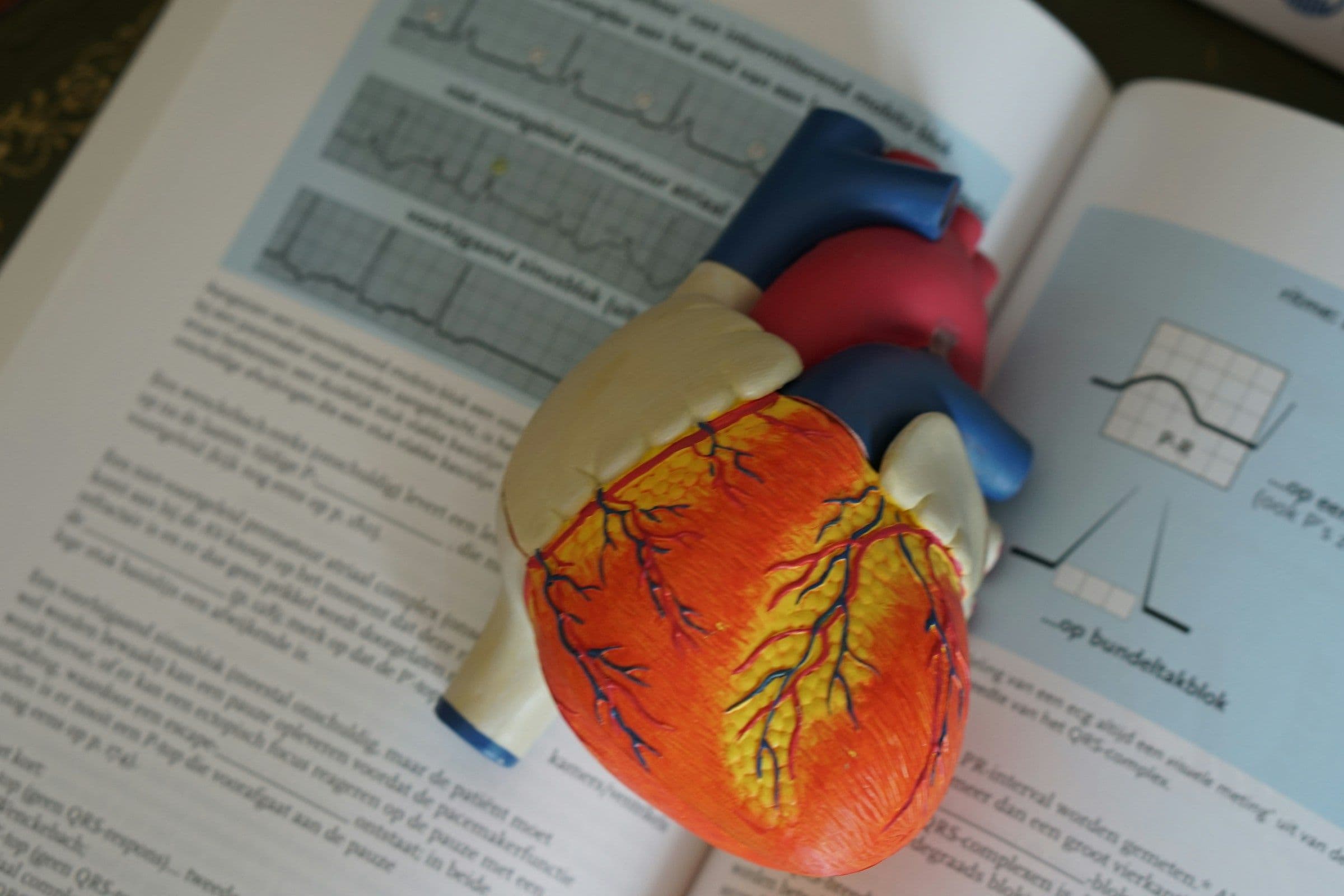
You can stop the cascade of confusion by running a short diagnostic and then applying a single, targeted repair.If this is done within an hour of noticing the gap, it transforms an accumulating liability into a teachable moment, rather than resulting in a week of wasted review.
To stop confusion from snowballing, perform a quick triage.
Classify the stuck point in 60 to 120 seconds: Is it a name, a location, a course, a relationship, or a function? Each type requires a different fix. Names require retrieval anchors; locations require spatial remapping; courses require tracing along landmarks; and functions require a one-sentence clinical story that links action to anatomy. This split-second decision can change everything, as it directs the rest of your ten-minute repair work.
How do you conduct a ten-minute fix that clarifies a single misconception?
Time-box three steps: Spend one minute trying to name or draw the item from memory. Then, use five minutes to try one different way to tackle the problem. Finally, use the last four minutes to test yourself again. If location is the problem, pull up a rotated 3D view and trace the structure with your finger or stylus while describing its neighbors.When relationships are difficult to understand, quickly draw a layered sketch to show which structures are on the surface and which are deeper, labeling only where they meet. The aim is not to finish the whole topic. Instead, it's to turn one fuzzy idea into one clear sentence and one accurate sketch that you can recreate.
Why does this short loop beat long, unfocused study sessions?
Focused corrective practice shows the genuine mistake and builds a corrective memory trace. Pattern recognition indicates that confusion increases when people repeatedly read the same explanation.Although it may appear to represent progress due to increased recognition, the mistake persists. By breaking that loop with a concise test-correct-test cycle, students can avoid false fluency and direct study time to areas that truly struggle under exam conditions.
When should you change the medium instead of the method?
If your five-minute repair fails twice, the problem is likely due to cue dependence rather than effort. Instead, think about changing what you're using: switch from reading textbook text to looking at a cross-sectional image, from labeling an atlas to watching a short dissection clip, or from a still diagram to using a tactile gesture.Changing the medium activates different modes of information retrieval, turning weak recognition into usable recall. Consider utilizing our AI study tool to enhance your learning experience.
How do you write the exact question that gets you a helpful answer?
Avoid vague requests. Replace “I don’t get this” with a clear one-line problem followed by a specific question.For example, say, “I can’t tell where the axillary artery becomes the brachial artery on this rotated view; please show its path in relation to the coracobrachialis and label two landmarks that can be felt.” This template encourages helpers to explain the location and relationship and to provide a landmark that can be checked during an exam, which is essential when working under pressure.
What should be done if the quick repair still leaves doubt?
Turn your doubts into a micro-experiment. Set a date for it and then forget about it until it's time to test. Make a straightforward test item: a cropped image, a rotated model, and a 60-second timed recall. Try that test at the end of the day and again after sleeping.If you still can't remember well, do the test again at larger intervals. This method helps you remember over time without increasing the time you study. To enhance your learning, consider using our AI study tool for personalized practice and effective recall strategies.
Why does this matter emotionally and practically?
Students regularly describe feeling overwhelmed and stuck. This makes studying feel hard and can lower confidence. This method recognizes those feelings and provides you with control: you can resolve confusion in one session and observe the results immediately.
Our AI study tool helps you develop effective study habits for long-term success. That small success can change how you act; instead of rushing to study at the last minute, you start making a habit of careful, helpful fixes that add up to real skill.
A Practical Example You Can Copy Right Now?
Pick one nerve that you find confusing and spend one minute trying to draw its branches. Then, take five minutes to use a 3D nerve trace, stopping to mark two significant landmarks. Afterward, spend four minutes redrawing the nerve and explaining its motor and sensory targets aloud.If your redrawn version is correct, you can stop; if it’s not, try the process again using a different method. Treat this whole cycle like a test, not just a review.
What happens when the quick-fix feels final?
The quick fix may feel like a lasting solution at first, but usually, there is one stuck point that just won't change. To navigate these challenges effectively, consider using tools such as our AI study tool, which can enhance your learning experience and help you tackle complex topics.
Get Answers for Free Today with Transcript
Most people learn anatomy by juggling atlases, notes, and last-minute cramming, as these habits feel familiar. However, this routine quietly uses up the hours needed for focused retrieval, spatial practice, and lab-ready recall. Platforms like Transcript fit perfectly into your workflow, acting as a pocket lab partner. They offer features such as scan-and-solve, an intelligent notebook, and an AI chat that converts a stuck diagram into a step-by-step repair process.Consider giving it a quick try to protect your spaced-repetition time and arrive at practicals feeling confident.