
How To Study for a Math Test?
Studying for a math test can feel like staring at a wall of formulas, whether you are using the Best Math Learning Apps or old notebooks. What actually works: steady review with spaced repetition, focused practice problems, active recall, timed mock tests, or careful error analysis?
This short guide shows how to build a clear study schedule, strengthen concept mastery, create a simple formula sheet, and calm test day nerves to help readers know How To Study for a Math Test.To make that easier, the Transcript's solution, an AI study tool, delivers tailored practice sets, instant feedback on mistakes, and a step-by-step plan you can follow in the days before the exam.
5 Different Strategies You Can Use to Study for Your Math Exams

1. Solve Like a Pro: Active Problem-Solving Practice
Why it works
Math is a skill you build by doing. Active problem solving forces you to use reasoning, connect concepts, and adapt methods when issues change. That practice builds procedural fluency and conceptual understanding at the same time.
How to apply it
Work through problems from your textbook, old exams, and online problem sets. Start with routine exercises, then move to more complex issues that stretch your reasoning. Attempt each question before checking the answer, then mark where you hesitated and why. Mix problem types so you practice selecting the proper method under exam conditions.
Tip
Set a rule: try a problem for at least 10 minutes before looking at a solution. When you review solutions, reproduce the steps on a blank page. Ask yourself which step was the turning point and why that method fits this problem.
Using AI tools
Use Transcript’s instant scan and solve tool to get step-by-step breakdowns when you are stuck. Scan a problem to see alternate solution paths, compare approaches, and generate similar practice items for targeted drilling. Which problem gives you the most trouble right now?
2. Lock It in Your Memory: Spaced Repetition for Math
Why it works
Spaced repetition moves facts and procedures into long-term memory by revisiting them at expanding intervals. It stops quick forgetting and turns short-term recall into reliable retrieval during a test.
How to apply it
Build a study schedule that revisits key formulas, theorems, and problem types on day one, day two, three days later, a week later, and so on. Use flashcards for formulas and quick methods, and include worked problems for procedural practice. Track which cards you forget and repeat those sooner.
Tip
Turn complex problem types into a checklist and schedule focused short sessions rather than long, unfocused study marathons. Use brief daily reviews to maintain momentum and avoid last-minute cramming.
Using AI tools
Transcript’s digital notebook can schedule spaced reviews and flag weak areas based on your performance. Let the AI suggest which topics to revisit and generate tailored flashcards and practice problems for the intervals you need.
3. Understand, Don’t Memorize: Grasp the Why
Why it works
When you understand why a method works, you can adapt it to new problems. Memorized recipes break down when problems change form; conceptual mastery lets you reconstruct procedures on the fly.
How to apply it
Derive core formulas from first principles when you can. Break complex formulas into parts and ask what each term does. For algebra and quadratic equations, work through a derivation by completing the square rather than only memorizing the formula.
Tip
Use short written explanations for each step as you solve a problem. Ask: Why is this step valid, and how would I explain it to someone who sees only numbers? That habit builds deeper understanding.
Using AI tools
Ask Transcript’s AI chat to explain the logic behind a formula and then quiz you with variation problems. Request step-by-step solutions and ask the AI to show alternative methods so you can see which ideas generalize best.
4. Train for Exam Day: Timed Practice and Mock Tests
Why it works
Timed practice reduces test anxiety and builds speed. Mock exams force you to manage time, pick efficient strategies, and learn how to triage problems during a real test.
How to apply it
Create practice tests from past exams or assemble representative problem sets. Time yourself under the same rules you will face in the exam. After each session, do error analysis: note which problems cost you the most time and why.
Tip
Simulate the complete exam environment: no phone, no notes, and a strict timer. Practice pacing by marking problems to return to, and practice skipping early if a problem stalls you for more than a set time limit.
Using AI tools
Have Transcript generate timed quizzes that match your syllabus and grade them automatically. Use the instant feedback to focus on the types of questions that reduce your score under time pressure.
5. Teach to Learn: Explain Concepts to Fix Gaps
Why it works
Teaching forces you to organize your thoughts and reveal gaps in your knowledge. When you explain a concept, you test whether you truly understand each step and why it matters.
How to apply it
Find a study buddy or family member and teach them a topic. If no one is available, explain aloud to yourself or record an explanation. Then solve problems while narrating your reasoning. Test yourself with related questions right after the explanation.
Tip
Challenge yourself to teach complex topics, not just easy ones. Ask the learner to ask questions or to solve a related problem; their mistakes reveal what you still need to clarify.
Using AI tools
Use Transcript’s AI as a sounding board. Teach a concept and then ask the AI to test you with targeted questions. Let the AI point out gaps in your explanation and suggest follow-up practice problems to reinforce weak spots.
Related Reading
- Why Am I So Bad at Math
- What Does PEMDAS Stand for in Math
- How to Make Math Fun
- How To Study For Maths Exam
- Funny Math Problems
How to Study for a Math Test
Gather Your Arsenal: Organize Your Study Materials
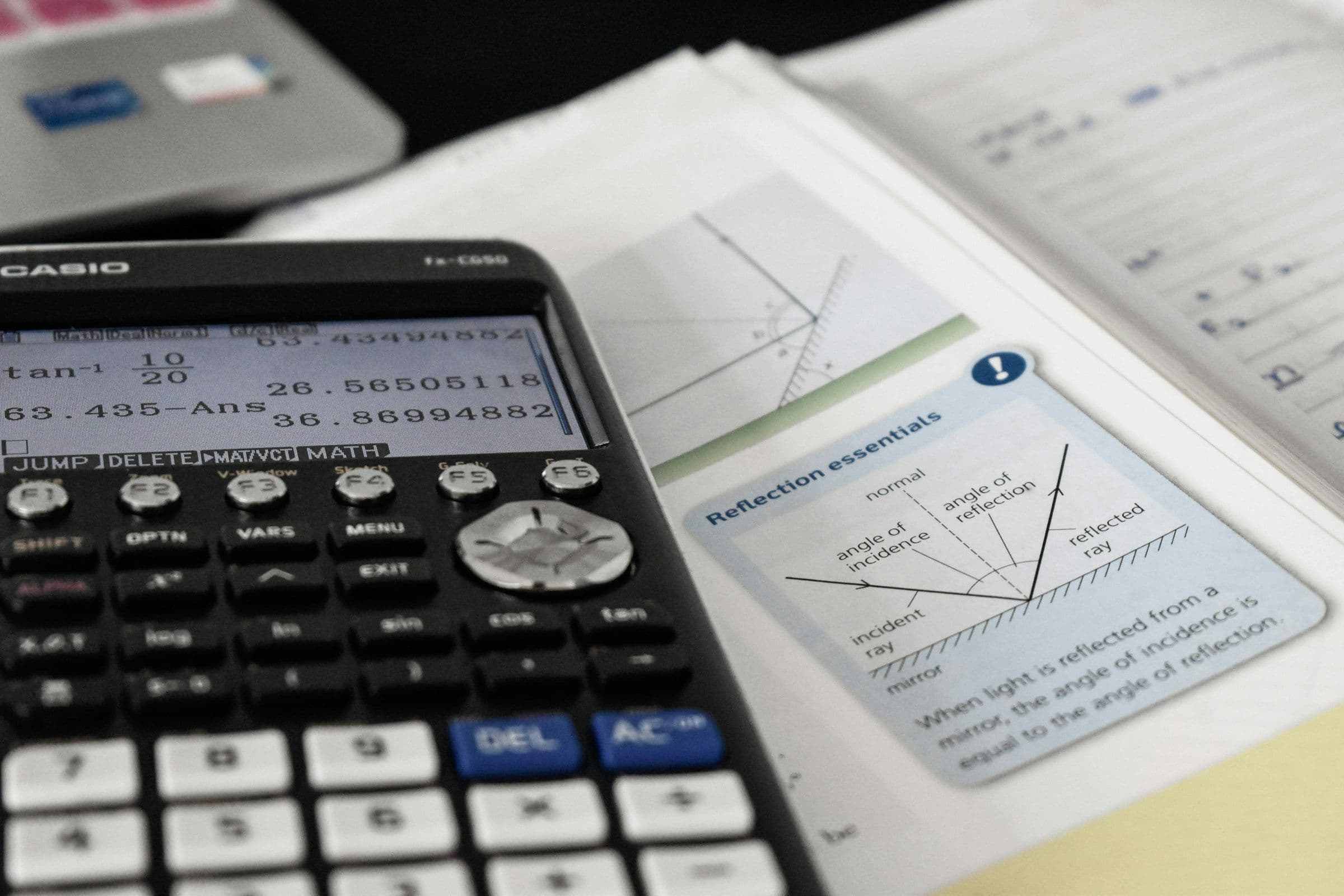
Collect textbooks, class notes, homework, past quizzes, and any online resources before you start. Create a single place for everything, digital or physical, so you do not waste time hunting for materials during study sessions. Build a formula sheet that lists each formula, theorem, and common trick you will need, written in clear form with one example per formula and reminders about when to use it. Scan past tests and assignments to spot recurring problem types and shared teacher preferences.
Tip
Upload notes and past papers into the Transcript’s digital notebook so you can tag topics and pull up any concept quickly during practice.
Map Your Time: Set a Realistic Study Schedule
Break the syllabus into topics and assign time blocks to each one. Estimate how long each topic will take and add buffer time for harder sections. Prioritize weak topics first and schedule them when you are mentally fresh. Use focused study blocks of 30 to 45 minutes followed by a 5 to 10 minute break to keep attention sharp. Ask yourself: which topic will cost me the most points if I miss it, and when will I study it?
Tip
Create the plan in Transcript’s digital notebook and set reminders so you stick to your schedule.
Do the Work: Active Problem Solving, Not Passive Reading
Solve problems immediately after reviewing a concept. Work with paper and pencil, write each step, and resist the urge to skip to the answer. Vary the problem types you practice: routine computation, word problems, applied exercises, multiple choice, and proofs. When you get stuck, try to identify the smallest next move rather than guessing the whole solution.
Tip
Use Transcript’s scan and solve feature to check your work and get step by step feedback that points out specific missteps.
Practice Like the Test: Use Mock Exams and Timed Runs
Simulate test conditions regularly. Set a timer, sit without notes, and work through a set of problems in one sitting. Timed practice trains pacing and builds confidence for multi question sections. After each mock, mark errors, note time sinks, and categorize mistakes so you can correct patterns in future practice.
Tip
Have Transcript generate personalized mock exams that match your exam format and difficulty level so you can practice under realistic pressure.
Study the Mistakes: Review and Refine Your Understanding
After solving problems, analyze every error. Ask what rule you missed, which calculation went wrong, or which assumption failed. Keep an error log that records the problem, the mistake, and the correct approach so you can target repeats. Revisit concepts you do not fully understand and work simpler scaffolded problems until logic feels natural.
Tip
Upload wrong solutions to Transcript and get targeted exercises that address the exact concepts behind your errors.
Understand Why, Not Just How: Build Conceptual Clarity
Turn formulas into stories about what they represent. Ask why a step follows and what changes if a condition is different. Translate algebra into words, and redraw geometric steps with labels that explain each move. This approach reduces careless mistakes and helps you adapt methods to unfamiliar problems.
Tip
Use Transcript’s AI chat to ask for plain language explanations that break down reasoning and show alternative solution paths.
Fine Tune Test Taking: Strategy and Mental Prep
Read each problem fully before you write. Estimate expected result to catch obvious errors and mark easier problems to return to after harder ones. Show enough work so partial credit is visible. Manage anxiety by practicing breathing and doing a short warm up of three quick problems before the real test.
Tip
Simulate final review sessions in Transcript by running a timed quick quiz of mixed topics to warm up on test day.
Use Smart Tools: Let Technology Speed Your Learning
Use apps that let you scan problems, check solutions, and organize notes. Track progress with practice logs, score trends, and topic mastery charts so you know where to spend your time. Use spaced repetition for key formulas and flashcards for common problem setups.
Tip
Transcript’s AI can scan your materials, highlight weak topics, and create targeted practice sets so you work on the right skills at the right time.
Get Feedback and Iterate: Keep Improving Between Sessions
Seek feedback early and often. Share tricky problems with classmates or tutors and compare approaches. After every study week, review what improved and what still causes errors, then update your schedule and practice focus. Minor, frequent adjustments keep progress steady and predictable.
Tip
Use the Transcript’s performance tracker to see week-by-week gains and to identify persistent gaps to close.
Transcript brings AI-powered study tools directly to students' fingertips, helping them tackle complex coursework more efficiently. Try our AI study tool to scan problems, organize notes, and get step-by-step explanations that help you learn faster.
What to Avoid When Studying for Your Math Exam

Stop Cramming: Why Last-Minute Study Fails
Why it’s a mistake
Cramming compresses complex ideas into a short window, so your brain stores little beyond short-term facts. Math demands conceptual understanding, not just memorized steps.
The consequences
You’ll forget formulas, miss subtle conditions on problems, and feel higher test anxiety. That leads to slower recall and more errors during the exam.
How to avoid it
Build a study schedule that uses spaced repetition and regular review of key concepts. Schedule short, focused sessions across multiple days and include self-testing and practice tests.
Tip
Use an intelligent calendar or reminders to block study slots for each topic, and treat those slots as non-negotiable appointments.
Mixing It Up: Why You Must Practice Every Problem Type
Why it’s a mistake
Only drilling one problem type trains pattern recognition, not flexible problem solving. Exams pull from the whole syllabus and often combine ideas.
The consequences
You risk getting stuck on unfamiliar questions and wasting time guessing under pressure.
How to avoid it
Rotate topics each study block: algebra, geometry, calculus, statistics, then repeat. Include past papers and mock tests to expose weak spots.
Tip
Create varied practice sets that mimic exam conditions and time limits so you build speed and accuracy.
Understand the Concept, Don’t Just Memorize Procedures
Why it’s a mistake
Rote learning hides gaps. Memorized steps break when a problem changes format or adds a twist.
The consequences
You may apply the wrong formula or misinterpret what a question asks, especially on multi-step problems.
How to avoid it
Ask why each step works as you solve problems. Rework proofs, rederive formulas, and explain steps out loud or in writing.
Tip
Use self-testing: solve a problem, then close the book and reconstruct the reasoning from scratch.
Review Mistakes Like They Matter — Because They Do
Why it’s a mistake
Skipping post-practice review wastes feedback. Mistakes repeat unless you analyze them.
The consequences
Minor errors compound into lost points on an exam, and you may keep repeating the same weak method.
How to avoid it
Keep an error log. For every wrong answer, write the mistake type, the correct approach, and one practice problem that uses the proper method.
Tip
Revisit error entries weekly until you no longer make the same mistakes on timed practice tests.
Face the Hard Stuff First, Not Last
Why it’s a mistake
Avoiding complex topics creates knowledge gaps that block progress on related problems. Complex topics are often the foundation for higher-level questions.
The consequences
When those topics appear on the exam, you’ll lose confidence and time. Partial knowledge increases test anxiety.
How to avoid it
Tackle complex concepts in short, focused sessions and break them into smaller subproblems. Use targeted practice and teach the topic to someone else to check understanding.
Tip
Schedule your most challenging topic at the start of a study session when focus is highest.
Active Practice Beats Passive Review
Why it’s a mistake
Reading notes or watching videos feels productive, but does not build problem-solving skills. Math requires hands-on practice.
The consequences
Passive review leaves you unprepared for exams that test application, not recognition. Your speed and accuracy will lag.
How to avoid it
After reading a concept, immediately solve several problems of increasing difficulty. Use flashcards for quick recall of formulas and definitions, but back them with problem-solving.
Tip
Alternate learning blocks: concept review for 10 minutes, then 20 minutes of problem solving, then a quick self-test.
Take Breaks So Your Brain Actually Learns
Why it’s a mistake
Long, uninterrupted study leads to diminishing returns and burned-out focus. Fatigue makes errors more likely.
The consequences
You lose retention and waste study time. Mental fatigue raises stress and harms exam performance.
How to avoid it
Use focused intervals like 25 to 30 minutes of study followed by a 5-minute break, and a more extended break after four cycles. Stand up, move, or do a short breathing exercise during breaks.
Tip
Log your productive blocks and adjust session length to match your attention span rather than forcing long stints.
Transcript brings AI-powered study tools directly to students' fingertips, helping them tackle complex coursework more efficiently. Try Transcript’s AI study tool to scan problems, get step-by-step solutions, and organize your study plan for free.
Related Reading
- How To Understand Maths Easily
- How To Get Better At Math In High School?
- How To Study For A Math Quiz
- How to Learn Math Fast
- Best Way to Learn Math
Get Answers for Free Today with Transcript
Transcript brings AI-powered study tools directly to students. Scan a written problem and get a clear, step-by-step solution while keeping the work in an organized digital notebook. Use the AI chat to ask why each step works, get alternate approaches, or request a more straightforward explanation when a concept does not click. Want to practice under timed conditions or focus on algebra versus calculus questions? Transcript adapts to those needs.
Instant scan and solve: Turn photos into worked examples fast.
Take a photo of any math problem and get an immediate solution with complete work shown. The system breaks down algebra, geometry, trigonometry, calculus, statistics, and word problems into manageable steps you can follow and copy into your practice set. Each solution highlights key formulas, shows substitutions, and points out common algebraic errors so you avoid repeating mistakes on exam day. What problem will you scan first?
Intelligent digital notebook: Track practice and close learning gaps
Save solved problems, group them by topic, and tag them by difficulty or error type. Use that notebook for spaced repetition, targeted practice, and quick review of formulas before a quiz. The notebook makes it easy to generate practice quizzes from the problems you missed so that you focus on weak areas rather than redoing what you already know. Which tags will you create to track your toughest problem types?
AI chat tutor: Ask for step-by-step help and deeper explanations
Type or paste a problem and ask the chat to explain each step, show an alternate method, or produce a more straightforward outline for memorization. Request practice problems of the same type, have the chat create a timed quiz, or ask for mnemonic cues for formula recall. Use the chat to practice active recall by hiding steps and trying to reproduce them, then checking your work with the AI.
How Transcript supports common study strategies for a math test
Use Transcript to power practice problems, mock tests, and timed practice to simulate exam pressure. Combine active recall and spaced repetition by saving problems you missed and scheduling reviews in the digital notebook. Apply error analysis: after each practice test, tag the errors and ask the AI to generate targeted drills on those exact topics. Want to build a formula sheet? Have the AI produce a concise list with usage notes and example problems.
Study session workflow that improves retention and performance
Start with a quick diagnostic quiz to find weak topics. Create a short study block of focused practice on one subject, then switch to mixed problem practice to improve transfer. After each block, use the AI to explain mistakes and to produce two new problems of increasing difficulty. Finish with a spaced review item from your notebook so concepts move into long-term memory. How long will your focused blocks be?
Test day tactics using Transcript as a prep tool
Use the digital notebook for a quick formula review and a list of problem templates to scan during the test if allowed. Practice pacing with timed mock tests the AI generates from past exam formats and common problem types. Train the habit of showing work and checking units or signs, since many points come from the method, not just the final answer. What timing strategy will you try on your next mock test?
Accuracy, limits, and how to use the app responsibly
Cross-check essential solutions, especially for multi-step proofs or novel word problems, and compare AI answers with your instructor's notes. Use the Transcript to build understanding, not to bypass the work. Keep a balance between using the app for step-by-step help and practicing unaided so you build fluency and confidence under test conditions. How will you split assisted practice and solo practice in your schedule?
Access and cost: free answers and usable tools
Transcript offers free access to scan and solve features and to the AI chat so you can get immediate help without subscription barriers. Use the free tools to generate practice sets, study guides, and targeted drills that match your syllabus or past exams. If you want more customization or scheduled review plans, explore available add-on features. Which free feature will you test first?
Related Reading
- Best AI Math Solver
- How to Learn Math on Your Own
- How to Learn Math Fast
- Hard Math Problems With Answers
- College Math Problems With Answers
- Math Problems for 5th Graders
- Symbolab
- Julius AI
- Microsoft Math Solver