Memrise vs. Anki
When it comes to studying, there's no one-size-fits-all approach. Everyone learns differently, so finding the study methods that work best for you is essential. Flashcards are an effective study tool for memorizing information. They promote active recall, help you organize information, and are easily customizable.
You can create flashcards for almost any subject, from languages to math to history. But traditional flashcards can get boring quickly. Luckily, there are digital flashcards that can make studying more interesting by incorporating images, audio, and even videos. But, How to Memorize Flashcards?
Digital flashcard apps also allow for customization while letting you study independently. Two of the most popular digital flashcard apps are Memrise and Anki. This guide aims to help you decide between the two as we explore Memrise vs. Anki.
Transcript AI study tool brings AI-powered study tools directly to students' fingertips, helping them tackle complex coursework more efficiently.
What Is Memrise?
Memrise Unpacked: What is it and How Does it Work?
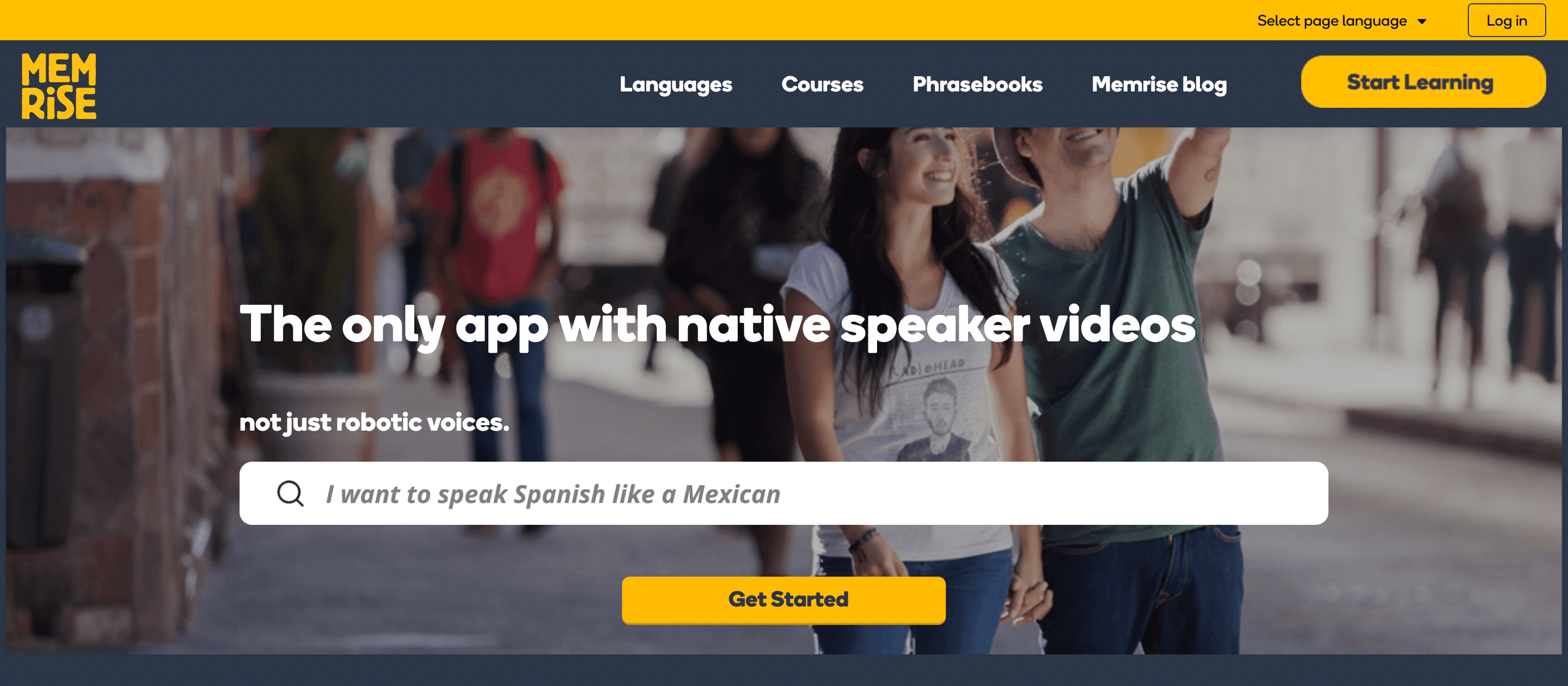
Memrise is a language learning platform combining gamified flashcard drills with real-world video content to help you learn a new language naturally. Unlike traditional flashcard apps, Memrise doesn’t just test you on words—it immerses you in the language through native speaker videos, audio prompts, and situational phrases.
At its core, Memrise is about memorizing vocabulary and phrases through spaced repetition—but it does so by wrapping repetition inside immersive, bite-sized lessons that are fun and easy to follow.
Finding Your Language Course on Memrise
Memrise offers guided paths for 20+ languages, including Spanish, French, Korean, Japanese, Italian, German, Mandarin Chinese, and more.
Each course includes themed modules (e.g., greetings, travel, grammar basics, business phrases).
Starting With Native Speaker Content
Every word or phrase is paired with short video clips of native speakers using it in real-life situations (e.g., at a café, on the street).
You hear the natural accent, rhythm, and body language, making learning contextual and conversational from day one.
Gamified Drills for Practicing Real-World Language Skills
Multiple game modes help reinforce your learning:
- Speed Review: Fast-paced recall
- Listening Skills: Audio-only quizzes
- Typing Mode: Spell words from memory
- Multiple Choice: Identify the correct meanings or translations
Every correct or incorrect answer updates your learning strength score, triggering Memrise’s light spaced repetition engine.
Earning XP and Streaks to Stay Motivated
- Keep your daily learning streak alive to stay motivated
- Earn XP, unlock achievements, and climb weekly leaderboards
Key Features of Memrise (2025 Edition)
Native Speaker Videos
Real-world content from over 30,000 clips—far more immersive than robotic audio.
Phrase-Based Learning
You learn usable chunks, not just single-word translations. This makes it easier to build real conversations.
AI-Powered Suggestions
Memrise tracks your accuracy and speed to recommend the right review sets and grammar modules.
Daily Reminders and Review Plans
Light SRS system brings up difficult words just as you’re about to forget them, reinforcing long-term memory.
Offline Mode (Premium)
Download courses to continue learning anywhere, anytime—even without Wi-Fi.
Custom Decks
In addition to official courses, you can explore or create community-made courses (beneficial for niche dialects or exam vocab).
What Makes Memrise Unique?
- It feels less like studying and more like watching real people use the language you want to learn.
- It gives learners cultural immersion by showing how words are used in tone, gesture, and situation.
- Its design motivates you through gamification and real-world goals (e.g., “How to order in a restaurant”).
- It’s ideal for building listening comprehension and speaking confidence, not just memorizing isolated words.
Who Should Use Memrise?
Memrise is best for
- Beginners or intermediate learners looking for structured, engaging language instruction
- Students who are overwhelmed by raw flashcards or grammar rules
- Visual and auditory learners who benefit from real-world context
- People who want to learn a language for travel, work, or casual conversation
- Learners who thrive on daily streaks, app reminders, and game-style motivation
Related Reading
- What Size Is a Flashcard
- Reason to Study With Flashcards
- How to Make a Flashcard
- How to Study With Flashcards
- Create Flashcards From Notes
What Is Anki?

Anki is a free, open-source flashcard program that uses a scientifically proven technique called spaced repetition (SRS) to help you remember information for the long term. Unlike Memrise, Anki is not structured like a course or guided program—it’s a self-directed memory tool.
Anki is primarily used in language learning to memorize vocabulary, sentence structures, grammar rules, alphabets (like Hiragana or Cyrillic), or even pronunciation patterns. It’s most popular among learners preparing for fluency, proficiency exams (e.g., JLPT, HSK, DELE), or long-term mastery.
How Anki Works
Create or Import Decks
You can manually create flashcards or download pre-made decks from AnkiWeb, Reddit, or forums.
Decks often include thousands of cards built for language learners, like:
- Japanese Core 2K/6K
- Mandarin HSK Level 1–6
- Spanish frequency lists
- Verb conjugation trainers
Intelligent Review Scheduling (Spaced Repetition)
After each card, Anki asks how well you remembered the answer:
- Again, Hard, Good, or Easy
- Based on your response, Anki schedules the card’s next appearance—for example:
- Got it wrong? You’ll see it again today.
- Got it right? You might not see it again for 4 days, 1 week, or 1 month.
- This trains your brain to recall just before forgetting, reinforcing long-term memory.
Customization
You control everything:
- Card format (e.g., Cloze deletion, front/back, audio prompts)
- Fonts, colors, hint fields
- Tags, sub-decks, and even note types with grammar references
- Use it to review with text, audio clips, screenshots, pronunciation breakdowns, and more.
Add-ons for Language Learning:
- Image Occlusion (hide parts of a sentence or chart)
- Furigana for Japanese learners
- Pitch accent tools for Mandarin and Japanese
- Typing-in-the-answer plugins to test production, not just recognition
Key Features of Anki (2025 Edition)
Full SRS Engine
Accurate algorithmic scheduling ensures you remember words for life, not just for a quiz.
Unlimited Customization
You design your cards to match your study style—use images, audio, LaTeX, example sentences, grammar references, and more.
Offline First
Anki runs offline and syncs with AnkiWeb (optional) so you can study anytime, anywhere, even without internet access.
Pre-Made Deck Libraries
Thousands of free, high-quality decks built by serious learners, teachers, and polyglots.
Advanced Filtering & Tags
Organize your learning by topic, grammar point, or proficiency level.
Cross-Platform Support
- Anki Desktop (Mac, Windows, Linux): Free
- AnkiDroid: Free
- AnkiMobile (iOS): Paid one-time app
- Syncs via AnkiWeb (free account)
What Makes Anki Unique?
Memory Efficiency
You only review what needs to be reviewed. Anki eliminates guesswork and focuses your energy only on what you're forgetting.
Longevity Over Entertainment
Unlike Memrise’s video-rich environment, Anki prioritizes mental recall and schedule optimization.
Community-Driven Content
Advanced users create specialized decks for languages, exams, grammar rules, and alphabets—many of which are better than commercial apps.
Learning is Self-Directed
You’re not locked into a curriculum. You decide what you want to learn, how often, and in what order.
Who Should Use Anki?
Anki is best for
- Intermediate or advanced learners committed to long-term fluency
- Self-starters who want maximum control over what and how they study
- Students prepping for exams like JLPT, HSK, or language proficiency certifications
- Learners studying characters, grammar tables, idioms, and native expressions
- People who want to combine textbook material with review cards
Memrise vs. Anki

Flashcard Learning Formats: Memrise vs. Anki
Memrise and Anki take very different approaches to the flashcard learning format, each appealing to different types of learners. Memrise features structured language courses broken into modules (food, greetings, verbs, etc.) so you can learn vocabulary in themed units. Lessons feel like episodes of a show. They’re short, digestible, and story-driven. You’ll get video clips of native speakers, visual cues, and interactive games to help you learn.
Anki, on the other hand, offers self-directed flashcard reviews. There are no lesson plans or hand-holding. Instead, every session is based on your personalized spaced repetition schedule. You choose what to study, how to format your cards, and when to review them. There aren’t any videos or guided lessons—just repetition and recall.
Verdict
Choose Memrise if you like structured lessons and multimedia immersion. Choose Anki if you want complete control over what you study and how.
Spaced Repetition and Memorization
Memrise and Anki also differ regarding spaced repetition algorithms and memory retention. Memrise uses a light SRS algorithm that triggers reviews based on past performance. These reviews are embedded into games and daily challenges. This helps you retain words you’ve seen in context, but the timing isn’t adjustable.
On the other hand, Anki uses pure spaced repetition with fully adjustable algorithms. Every card is reviewed at the scientifically optimal moment. You can set intervals, adjust difficulty, and analyze your recall statistics.
Verdict
Anki wins for long-term memory efficiency and customization. Memrise keeps reviews engaging but lacks algorithmic depth.
Ease of Use: Memrise vs. Anki
Anki and Memrise also differ significantly in terms of ease of use. Memrise is extremely beginner-friendly. Just download the app, choose a course, and start learning. All content is pre-loaded and organized. Built-in reminders and streak trackers keep users consistent.
Anki requires setup and familiarity with the interface. Card creation, add-ons, and deck importing can be confusing at first. It’s better suited to folks who enjoy tinkering and learning systems.
Verdict
Memrise is better for casual or beginner learners. Anki is better for tech-savvy or highly motivated learners.
Flashcard Content and Customization
When it comes to flashcard content, Anki and Memrise are worlds apart. Memrise has fixed content with some user-generated decks. Built-in courses include words, phrases, and videos, but little room for editing, making them less suitable for specialized vocabulary or grammar.
Anki, on the other hand, is fully customizable. You can create cloze deletions, typing prompts, or multi-field grammar breakdowns. You can also add audio, screenshots, native script, color coding, and more. Anki is ideal for adding textbook content, grammar tables, or conjugation charts.
Verdict
Anki is the clear winner for advanced flashcard customization. Memrise is limited but user-friendly and pre-built.
Audio, Video, and Real-World Immersion
Memrise and Anki also differ in terms of audio, video, and real-world immersion. Memrise features native speaker videos with pronunciation, expression, and context. The high-quality content mimics real-world scenarios and helps learners develop listening and speaking skills early.
Anki only includes audio or video if you manually import it. While it can be immersive with the right decks, this requires effort. There’s also no built-in visual storytelling or conversational lessons.
Verdict
Choose Memrise for real-world exposure and pronunciation. Use Anki if you're willing to build that experience yourself.
Offline Access & Platform Flexibility
Finally, Memrise and Anki will be compared in terms of offline access and platform flexibility. Memrise offers offline learning in the premium version. It’s available on mobile apps (iOS, Android) and web browsers.
By default, Anki is 100% offline. It works across desktop (free), Android (free), and iOS (paid app). Data syncs via a free AnkiWeb account.
Verdict
Anki gives full offline access and file ownership. Memrise is great online, but offline learning requires a subscription.
Explore Transcript's AI-Powered Learning Tools For Memorizing Flashcards
Transcript brings AI-powered study tools directly to students' fingertips, helping them tackle complex coursework more efficiently. Our platform features three core tools: instant scan-and-solve for any subject, an intelligent digital notebook, and an AI chat system that provides step-by-step explanations.
Simply scan your problem; our AI provides detailed, step-by-step solutions to help you learn faster and more effectively. Whether you're stuck on a complex equation or need help breaking down complicated concepts, Transcript transforms the way you study. Get answers for free with Transcript.
Related Reading
- How to Make Flashcards With Paper
- Best Way to Memorize Flashcards
- Best Way to Study Flashcards
- Best Flashcard App
- Best AI Flashcard Generator
- Best Flashcard App for Medical Students
- Quizizz vs. Kahoot
Which Should You Use?

Choose Memrise If You Prefer a Structured, Game-Like Learning Experience
Memrise offers a fun, interactive method for mastering vocabulary. When you open the app, you’ll see a list of courses that Memrise and the community created. Each course has a structured layout with different modules so that you can tackle your learning in manageable steps.
Memrise also presents your studies like a game, where you earn points and work to beat your high scores. This keeps learners motivated and coming back for more. If you want to learn vocabulary for a language you’re just beginning to study, Memrise is a great choice.
Choose Memrise If You Want to Sit Back and Follow a Curated Lesson Path
Another appealing aspect of Memrise is that it allows you to sit back and follow a structured lesson path. You don’t have to build your flashcards or customize your studying—unless you want to. Instead, you can dive right in and start learning.
This makes the app perfect for beginners or casual learners who want to experience a new language without feeling overwhelmed.
Choose Memrise If You Don’t Want to Build Flashcards—You Want to Be Taught
Some language learners love to create their study materials to customize their learning. Others just want to be taught. If you fall into the latter category, you’ll appreciate how Memrise takes on the role of a teacher. The app gives you access to pre-made flashcards and helps you learn through repetition and recall.
Choose Memrise If You’re a Beginner or Intermediate Learner
If you’re just starting out learning a new language or are at the intermediate level, you’ll benefit from using Memrise. The app exposes learners to vocabulary gradually, so you can build your knowledge without feeling overwhelmed.
Choose Memrise If You Learn Better Through Immersion
Learning a new language helps to see how words and phrases are used in context. Memrise excels at immersive learning. For example, the app features videos of real people speaking the language so you can hear how they use vocabulary in everyday conversation. This helps you mimic authentic pronunciation and intonation to sound more like a native speaker.
Choose Memrise If You Thrive with Daily Motivation Tools
Motivation is key to language learning success. Memrise offers several built-in tools to help keep you motivated. For instance, the app tracks your learning progress and even awards points for reaching milestones. You can also compete against other learners on a leaderboard and earn rewards for daily studying to encourage you to keep going.
Choose Memrise If You Value Convenience Over Customization
When you open Memrise, you can learn a new language without setting anything up. This is ideal for casual learners who want a break from their busy lives to learn new vocabulary. In contrast, Anki requires time to build custom flashcards before you can start learning.
Memrise is Perfect for
- Travelers, casual learners, or people learning a second language for general use.
- Students with limited time who want fast, structured lessons.
- Auditory and visual learners who respond well to immersive media.
- Those preparing for daily conversation, not technical exams.
Choose Anki If You Want to Achieve Long-Term Fluency or Exam Mastery
Anki is one of the most powerful language learning tools for achieving long-term fluency. The app’s flashcards are customizable and based on spaced repetition algorithms to help you learn and retain vocabulary efficiently. If you’re preparing for a language proficiency exam, using Anki can help you master the vocabulary and avoid the dreaded test-day panic.
Choose Anki If You Want to Track Every Detail of What You’re Forgetting and Study Accordingly
Anki allows you to deeply dive into your learning progress to understand precisely what you’re forgetting and how to improve your studies. The app keeps track of your performance on each flashcard and uses this data to inform your study sessions. You’ll see the cards you don’t know well more frequently in your reviews until you’ve mastered them.
Choose Anki If You Learn Better with Repetition and Recall-Based Learning
Not everyone learns the same way. Some people prefer being taught, while others thrive on testing. If you’re the latter, you’ll love Anki. The app will test you on vocabulary until you know it inside and out.
Choose Anki If You Prefer Full Control Over Your Learning System
Anki allows you to build your flashcards from scratch and customize them to suit your learning needs. You can create decks from textbooks, YouTube videos, audio files, and more. You can also tweak your cards' formatting, algorithms, and appearance settings to help you learn better.
Choose Anki If You Have the Patience to Build or Find Powerful Decks
Anki has a steeper learning curve than Memrise, but it’s worth it. The app can initially seem intimidating, especially when you open it for the first time. You won’t see any flashcards; instead, you’ll see a dashboard that helps you customize your flashcards. Anki is an excellent choice if you’re okay with investing time upfront to build a long-term study system.
Choose Anki If You’re Learning Multiple Languages or Studying In-Depth Grammar
If you’re diving deep into verbs, conjugations, sentence structure, and alphabets, Anki is the way to go. The app excels at helping you master phrases and the framework behind them.
Anki is Perfect for
- Medical, law, or linguistics students.
- Serious self-learners and polyglots.
- Learners using external materials (like textbooks, audio, or YouTube lessons).
- Anyone pursuing long-term fluency, not just conversational ability.
Get Answers for Free Today with Transcript
If you want to memorize flashcards, the AI-powered study tools from Transcript can help. In brief, Transcript's platform features three core tools, all of which help students learn better, faster, and more efficiently. The first feature is an instant scan-and-solve tool that gives students specific answers to complex problems from any subject. The second feature is a digital notebook that organizes information in a way that makes sense to each user.
Finally, an AI chat system provides step-by-step explanations for complex concepts. Simply scan a flashcard or problem, and Transcript's AI offers detailed, step-by-step solutions to help you learn faster and more effectively. Whether you're stuck on a complex equation or need help breaking down complicated concepts, Transcript transforms the way you study. Get answers for free with Transcript.