Passive Vs Active Studying
Ever sat through hours of highlighting and felt your scores barely budge? When you ask What Study Method Is Best For Me, the difference between passive review and active learning matters: passive habits like rereading and highlighting can feel safe but leave gaps, while active techniques such as self testing, spaced repetition, summarizing, and deliberate practice build recall and understanding. This piece will help you understand the difference between passive and active Studying and pick study strategies that improve retention, focus, and exam performance. Ready to stop spinning your wheels and study smarter?Transcript's AI study tool can turn your notes into targeted quizzes, plan spaced practice sessions, and flag weak areas so you spend time on what actually sticks.
What Is the Difference Between Active and Passive Studying?

Passive Studying Defined: What It Looks Like and Why It Feels Easy
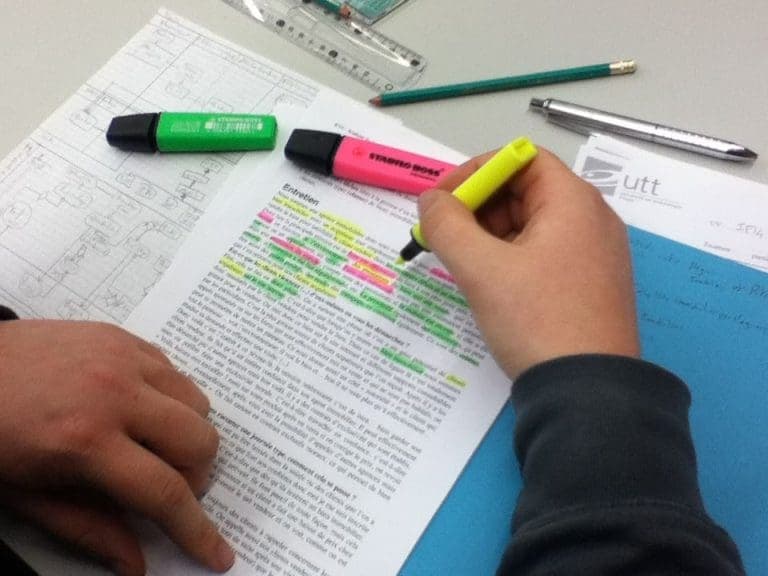
Passive studying means you take in material without forcing your brain to work with it. You read, watch, or highlight. You may feel familiar with the text, but you have not practiced recall or application. Common habits include rereading notes repeatedly, watching recorded lectures without pausing to check your understanding, highlighting large swaths of text, and copying slides without making your own questions. That easy feeling is a fluency illusion where recognition is mistaken for recall.
Examples that crop up in everyday study sessions include rereading a chapter five times and feeling sure you know it, or watching tutorial videos from start to finish without pausing to test yourself. Those patterns produce weak encoding and brittle memory because you do not practice retrieving information from memory.
Active Studying Defined: How You Force Memory to Grow
Active studying makes your brain pull information out and use it. It relies on retrieval practice, practice testing, spaced repetition, and elaboration. Methods include using flashcards to test recall, explaining a concept out loud to someone else or yourself, writing summaries from memory, doing problems without looking at solutions, and creating your test questions. Each action produces stronger memory traces and better transfer to new problems.
Active study uses the testing effect and the generation effect to strengthen long-term memory. It combines deliberate practice with metacognition so you can see what you do not yet know.
Core Differences: Why Passive Feels Productive but Often Fails
Passive study builds familiarity. Active study builds recall. Familiarity helps you recognize words on a page. Recall helps you reproduce an answer in a timed exam or apply a concept in a new context. Passive learning boosts short-term confidence. Active learning produces durable learning and skill transfer.
The key mechanisms are different. Passive study relies on shallow encoding and recognition. Active study forces effortful retrieval and strengthens neural connections. Passive methods hide gaps in understanding because you can sense familiarity while still lacking usable knowledge. Active methods reveal those gaps early through testing and error correction.
Why Most Students Fall Into Passive Mode
Students choose passive methods because they feel lower stress and seem efficient in the moment. Time pressure, digital distractions, unclear study plans, and habits picked up in class reinforce passive work. Many students also lack practice with metacognition, so they cannot accurately judge their own understanding. When a textbook feels easy, they stop testing themselves and keep reading, which compounds the illusion of mastery.
Social and environmental factors matter too. Group study that becomes passive chat, or long streaming sessions with little note-taking, push learners toward passive routines. That makes exams a rude surprise when recall is required.
What To Do Instead: Practical Steps to Shift Toward Active Study
- Turn highlights into questions. After reading a paragraph, close the book and ask what the main point was. Create a flashcard or a question from that answer.
- Use retrieval practice every session. Spend the first 10 minutes trying to write what you remember from the previous lesson before reviewing notes. Test yourself with practice questions or old exams under timed conditions.
- Space your practice. Study key items several times across days or weeks instead of cramming. Use spaced repetition software or a simple planner that schedules reviews at increasing intervals.
- Mix topics during study blocks. Interleaving forces discrimination between concepts and improves problem-solving. For example, alternate problems from different chapters rather than doing all similar problems in a row.
- Practice explaining ideas aloud. Teach a classmate, a friend, or talk through a concept to an empty room. Teaching reveals gaps and forces the organization of concepts.
- Convert passive media into active tasks. When watching a lecture, pause every 10 minutes to summarize from memory and write one question you might be asked.
- Measure what you do. Keep quick logs of practice tests, correct rates, and time spent on difficult items. Use that data to adjust study focus and to practice metacognition.
A simple session template you can use today
- Spend 5 minutes on retrieval: list what you recall about the topic.
- Spend 25 minutes on focused practice: do problems or test with flashcards.
- Spend 10 minutes on correction and elaboration: check errors, add notes, create 3 questions.
- Schedule two short review sessions later in the week.
How to apply active methods by subject
- For fact-heavy subjects, use spaced repetition and flashcards with active recall and example sentences.
- For problem solving, use timed practice problems, error analysis, and mixed problem sets.
- For essays and concepts, write outlines from memory, then expand and critique your work to build synthesis skills.
Questions that make study sessions active right away
- What first principle could I explain in one minute? Which problem type still causes mistakes? Can I make a 10-question quiz from my notes and take it without peeking?
Start small and test frequently so you find what needs work and build real mastery rather than convincing yourself you know it.
Related Reading
- Is Pomodoro Technique Effective For Studying
- When Is The Best Time To Study For A Test
- How Many Hours A Day Should I Study
- How To Concentrate When Studying
- How To Create A Study Plan
- How Do Dynamic Study Modules Speed Learning
7 Examples of Active vs. Passive Study Habits

1. Rereading Your Notes vs Recall: Make Memory Work for You
Rereading feels safe because the words look familiar, but familiarity is not mastery. Try closing your notebook and speaking or writing the main ideas from memory. That practice uses active recall and the generation effect to strengthen retention; it forces retrieval practice instead of passive recognition. Break notes into chunks, summarize each chunk from memory, then check accuracy and correct gaps. Can you recall the three most important points from your last lecture without looking?
2. Watching Videos Straight Through vs Pausing and Producing
Watching a video without stopping lets information wash over you without testing your understanding. Pause after each section, state what you learned in one sentence, or sketch a quick concept map to show connections. That practice moves you into deep processing and elaborative interrogation, and it builds transfer ability so you can use ideas on problems or essays. Try copying a video transcript into a tool that generates questions so you convert watching into practice testing.
3. Highlighting Text vs Questioning Every Mark
Highlighting alone creates a colorful record, not a memory. Turn each highlight into a quiz item: ask what it means, why it matters, and how an examiner might test it. Put those prompts on flashcards and schedule them with spaced repetition so testing is distributed over time. Set a rule: if you highlight, you must write one question about it before moving on.
4. Passive Listening in Class vs Structured Note Work
Sitting through a lecture without interacting invites zoning out. Use a structured format like Cornell notes to separate main ideas, evidence, and follow-up questions. When the professor says something unclear, write a specific question next to the note and answer it later using retrieval practice or follow-up research. This boosts metacognition and turns class time into the start of active learning.
5. Cramming the Night Before vs Scheduled Self-Testing
Reading a textbook the night before an exam increases short-term recognition but not durable recall. Replace last-minute reading with short self-made quizzes after each section and repeat those quizzes over days using spaced repetition and interleaving with other topics. Practice testing exposes weak spots and gives useful feedback so you can correct mistakes before the exam. How will you break the material into review sessions?
6. Memorizing Definitions vs Applying Concepts
Learning a word-for-word definition helps recognition, but not application. After you learn a definition, create two or three real-life examples, a simple analogy, and one short problem that uses the concept. Teach the idea to a friend or explain it aloud in your own words; self-explanation forces deeper processing and builds transfer. Can you make an example that would surprise a classmate?
Transcript brings AI-powered study tools directly to students' fingertips, helping them tackle complex coursework more efficiently. Scan a problem and our AI will give detailed, step-by-step solutions, an intelligent digital notebook captures and organizes your work, and an AI chat gives guided explanations to help you study smarter.
Why Active Studying Leads to Better Grades
Why Your Brain Learns When It Struggles
Passive review feels comfortable, but that comfort creates a false sense of mastery. Rereading notes or watching lectures builds familiarity, not recall, and that familiarity often evaporates under test conditions. Retrieval practice forces your brain to retrieve information, which strengthens the memory trace and makes it easier to access later. Try this: close your book, write down what you remember, then check for gaps and correct them.
Active recall acts like a workout for memory. Flashcards, low-stakes quizzes, and closed-book summaries create effortful retrieval that cements learning and supports long-term retention rather than shallow encoding.
Move Beyond Memorizing: Build True Understanding
Memorizing facts can help with short answer prompts, but applying concepts needs a deeper grasp. When you summarize in your own words, create analogies, or teach a peer, you force your brain to connect ideas and reorganize knowledge into practical frameworks. That process lowers cognitive load when you meet novel problem formats or real-world scenarios.
Use concept maps, worked examples, and explain-aloud exercises so you can spot gaps in your reasoning. Ask yourself how a principle would show up on a different test question and then generate that question from memory.
Study Less, Remember More
Active study compresses time. The testing effect and spaced repetition mean a short session spent on retrieval beats long sessions of passive reading. Interleaving topics and spacing practice forces your brain to reencode information in varied contexts, which improves long-term retention and study efficiency.
Instead of marathon rereads, try multiple short retrieval sessions spread over days, mixing related topics. A focused 30-minute session with active recall and quick feedback often produces more durable memory than two hours of highlighting and skimming.
Reduce Test Anxiety by Practicing the Test
Stress drops when practice mirrors the exam. Timed self-tests, explaining answers under pressure, and doing practice problems without notes make the real test feel familiar. Regular practice testing builds confidence and improves metacognition so you can judge what you know and what needs work during revision.
Create practice conditions: set a timer, limit materials, and simulate the exam environment. That experience teaches your brain to perform retrieval under pressure instead of freezing when it counts.
Try Transcript for Faster, Smarter Study
Transcript is an AI study tool that brings AI-powered study tools directly to students’ fingertips, offering instant scan and solve for any subject, an intelligent digital notebook, and an AI chat that gives step-by-step explanations. Simply scan your problem, and our AI provides detailed, step-by-step solutions to help you learn faster and get answers for free with Transcript.
How to Shift from Passive to Active Studying (Simple Tips That Actually Work)

Start With a Goal: Give Your Session Direction
Too many students open a chapter and drift. Pick one clear learning goal before you touch the book or screen. Write it down in one line: “Explain osmosis in plain terms,” “List five causes of the French Revolution,” or “Finish 10 flashcard reviews on Chapter 6.” Break that goal into two or three tiny tasks you can complete in one session. Use Transcript to turn your notes into explicit learning objectives and check off each task as you go. What exact answer will you produce by the end of this session?
Brain Dump Force Active Recall Fast
Study for a short , focused block, then close everything and dump what you remember onto paper for five minutes. That active recall trains retrieval, exposes gaps, and creates stronger memory traces than rereading or highlighting. After the dump, compare it to your notes and mark what you missed. Repeat the cycle: study, dump, correct. Upload your notes to Transcript to generate AI quizzes and see which key ideas you missed. Try this now: study for 15 minutes, then give yourself a five-minute brain dump.
Turn Passive Notes Into Targeted Questions
Stop highlighting passively and turn highlights into questions. Convert facts into how and why questions, convert definitions into application prompts, and mix concept questions with examples. Example: Highlighted sentence “Mitosis produces identical cells” becomes “How does mitosis ensure identical daughter cells?” Use those questions for practice testing and flashcards. Transcript can auto convert lecture notes into question sets so you practice active recall instead of passive review. Which sentence will you turn into a question first?
Teach It to a 10-Year-Old The Feynman Move.
Pick a topic and explain it simply, out loud, as if to a child. Use plain language. When you stall or hide behind jargon, you’ve found a gap in your understanding. Go back, study the gap, then explain again. Record yourself or write the explanation and run it through Transcript for a checklist of missing points. This method forces elaboration and improves encoding and consolidation. Pick one concept and explain it for five minutes now.
Short, Frequent Bursts Trade Cram Sessions for Focused Sprints
Long passive sessions turn into mindless rereading. Use 25-minute bursts with a five-minute break. In each burst, set one specific goal and use an active task: answer questions, do practice problems, complete retrieval drills, or mix subjects to use interleaving. Rotate topics across bursts to strengthen discrimination and reduce interference. Keep sessions short so your brain stays alert and retrieval practice stays intense. Which subject will you sprint on first?
Practice Retrieval Every Time Test, Don’t Rewatch
Every study step should ask: Can I explain this without looking? Closed-book recitation, practice testing, and timed quizzes create the testing effect that passive learning can’t match. Use flashcards, practice problems, and self-made quizzes. When you test, grade yourself honestly and revisit errors with focused review. Transcript can generate practice tests from your notes and track what you miss most. Close your notes now and explain the main idea out loud for one minute.
Review With Spaced Repetition Makes forgetting Work for You.
Space reviews across days so the forgetting curve strengthens memory instead of erasing it. Use a simple schedule like the next day, three days later, one week later, then two weeks. Prioritize items you fail and let easier items stretch out. Use flashcards with a spaced repetition system or Transcript’s review cycles to automate intervals and focus on weak spots. Schedule the following review for tomorrow and mark which items you expect to forget.
Related Reading
- How Long to Study for GRE
- Should You Study When Tired
- Creative Ways To Study
- Study Tips For Teens
- Study Skills For High School Students
- 7 Secret Methods For Studying
Get Answers for Free Today with Transcript
Passive Versus Active Study: What Actually Changes What You Remember
Passive studying means you let information wash over you. You reread chapters, highlight lines, and listen to lectures without testing yourself. Active studying forces your brain to work: retrieval practice, practice testing, formulating answers, teaching someone else, and solving problems from memory. Passive learning produces familiarity but weak recall. Active learning strengthens encoding and consolidation through effortful retrieval and feedback. Which approach will produce the skills or grade you want this week?
Signs You Are Stuck in Passive Mode
Do you feel confident when you reread notes but fail to reproduce answers on a quiz? Do highlights pile up with no improvement in problem-solving? Those are classic signs of shallow processing. Other signs include long study sessions with little practice testing, relying on massed practice instead of distributed practice, and skipping feedback that corrects misconceptions. These habits make comprehension fragile and slow down true mastery of concepts.
Simple Active Techniques That Work Better Than Rereading
Use retrieval practice and self-testing. Close your notes and write what you recall, then check and correct errors. Create flashcards that force generation rather than recognition. Space reviews over days to use spaced repetition and avoid cramming. Mix topics within a session to use interleaving, which builds flexible problem-solving. Explain concepts out loud in plain language to apply elaboration. Pair practice tests with immediate feedback so errors become learning opportunities.
How to Use Practice Problems and Worked Examples Correctly
Start with worked examples when a new procedure is unfamiliar. Study the steps, then recreate the solution from memory. Gradually replace examples with similar problems that you solve without a guide. Use the generation effect: try to produce answers before you see them. Track errors in an error log and revisit those problems with targeted practice rather than rereading the whole chapter.
When Passive Strategies Still Have a Place
Passive methods help with initial exposure, building a rough map of content, or reviewing a lecture while commuting. Skimming can orient you to structure and key terms before you switch to active methods. Use passive reading deliberately for preview, not as the primary study method. Ask yourself what task you will perform after reading, and design an active practice to meet that goal.
Practical Steps to Move from Passive to Active Today
Set a clear goal for each session: a set number of retrieval trials or solved problems. Use timed blocks of focused practice and short breaks to reduce fatigue. Convert every note into a question you can quiz yourself on. Replace highlighting with a quick self-test every 10 minutes. Schedule distributed reviews for older material and interleave related topics to sharpen discrimination between problem types.
How Transcript Fits into Active Learning and Better Retention
Scan a problem and get a step-by-step solution that explains why each step matters rather than just answering. Use the intelligent digital notebook to turn solved examples into flashcards and spaced repetition schedules for retrieval practice. Ask the AI chat to quiz you, generate practice tests, or create interleaved problem sets that match your weak areas. The platform supports deliberate practice by providing immediate feedback and alternative solution paths that reinforce encoding and problem-solving. Get answers for free with Transcript.
Study Session Templates You Can Start Using Now
Short session for recall: 10 minutes retrieval from memory, 10 minutes targeted practice on errors, 5 minutes review with flashcards. Problem-solving block: warm up with two quick retrieval items, work three graded problems from easiest to hardest, then try a new problem without notes. Long session for consolidation: alternate 25 minutes of focused practice with 5-minute review quizzes and spaced repetition checks for older topics.
How to Monitor Progress and Use Metacognition Effectively
Track accuracy rates on practice tests and record the time it takes to solve problems. Use error logs to spot persistent misconceptions and ask why an error occurred. Periodically predict your performance before a practice test and compare the prediction to actual results to sharpen self-assessment. Use Transcript analytics or your notebook to spot patterns in mistakes and adjust practice focus accordingly. What trend do you see in your error log this week?
Related Reading
- Best Time To Study
- Foods That Help You Focus While Studying
- Memory Techniques For Studying
- Study Timetable Template
- Best Book Summary Apps